




Sourcing frozen lunch kits wholesale gives foodservice operators a pre-portioned, shelf-stable, frozen meal solution that reduces kitchen labor, standardizes plate consistency across locations, and shortens the time between order and service. Hotels, hospitals, schools, airlines, and catering companies increasingly use them to fill labor gaps without sacrificing food quality or presentation.
Why This Matters for Culinary Specialties
Culinary Specialties manufactures and distributes wholesale frozen and ready-to-finish foods — including a dedicated boxed lunch line — for hotels, caterers, convention centers, country clubs, hospitals, and airlines. Frozen lunch kits wholesale sourcing sits squarely inside that existing menu: operators who need consistent, labor-saving lunch programs can source them the same way they already source appetizers, main dishes, and breakfast items from Culinary Specialties’ catalog, backed by FDA and USDA oversight and 25+ years serving the hospitality industry.
Quick Takeaways
- Frozen lunch kits reduce dependence on a full prep-and-cook staff by shifting labor to receiving, thawing, and finishing.
- They standardize portion size and plate presentation across multiple properties or service lines.
- Shelf-stable frozen storage extends usable inventory life compared to fresh-prepared lunches, cutting food waste.
- They’re used across hospitality, healthcare, education, and transportation foodservice segments.
- Buying frozen lunch kits wholesale through a manufacturer like Culinary Specialties gives operators access to FDA/USDA-regulated production rather than in-house or single-location prep.
- Kit quality varies by manufacturer, so ingredient sourcing and packaging matter as much as price.
What Exactly Is a Frozen Lunch Kit?
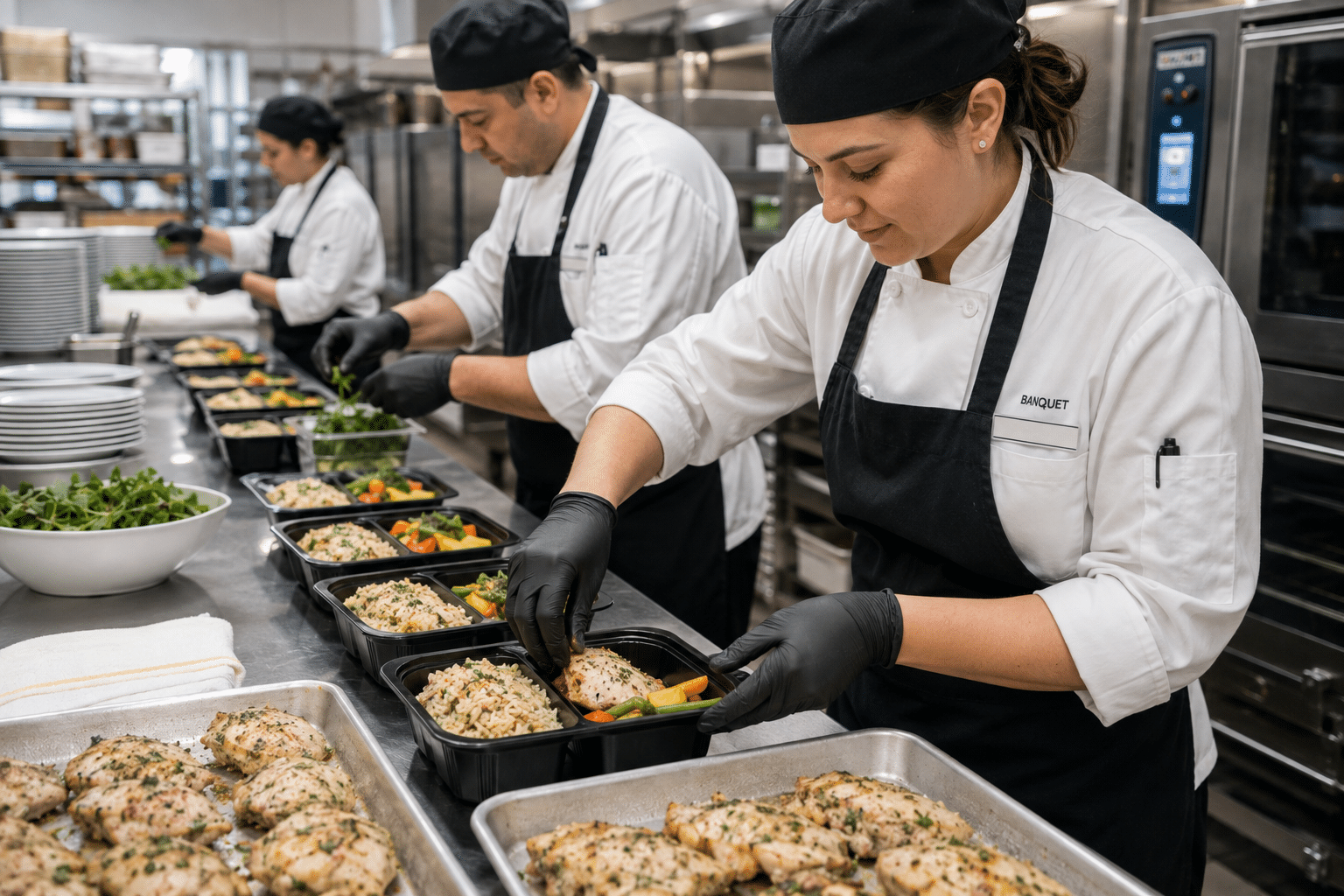
A frozen lunch kit is a pre-assembled or pre-portioned meal — typically a protein, side, and sometimes a bread or dessert component — manufactured, flash-frozen, and packaged for later thawing, heating, or assembly by the receiving kitchen. Kits range from fully cooked, heat-and-serve formats to component kits that staff finish on-site.
The defining feature is standardization: every kit that leaves the manufacturer’s facility is portioned, packaged, and labeled the same way, which is difficult to replicate consistently in a busy in-house kitchen making dozens of lunches by hand.
How Do Frozen Lunch Kits Differ From Traditional Boxed Lunches?
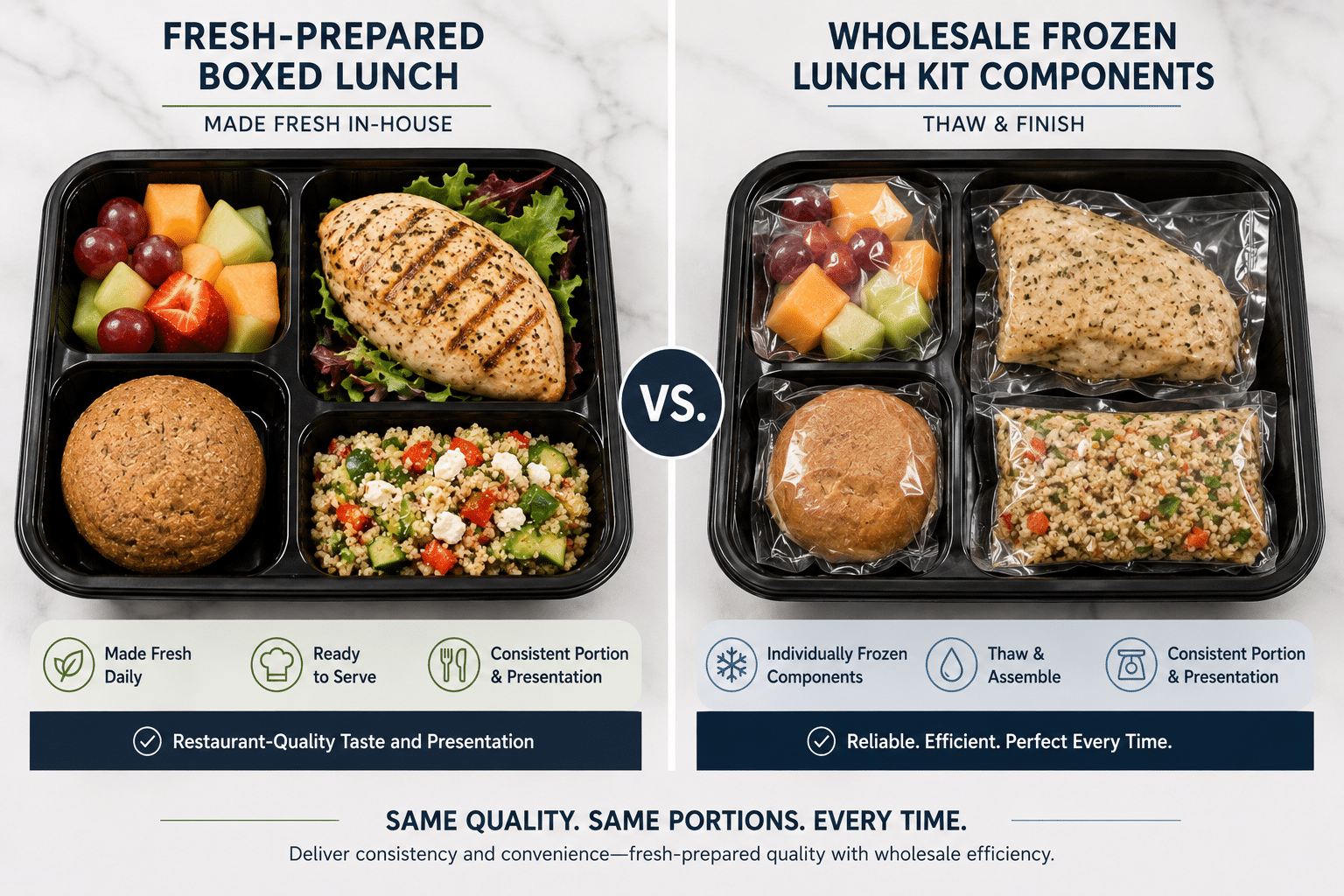
Traditional boxed lunches are usually assembled fresh, same-day, by on-site kitchen staff using ingredients prepped that morning. Frozen lunch kits are manufactured in advance, frozen for extended storage, and finished or assembled closer to service time.
The practical difference is lead time and labor. A fresh boxed lunch program requires prep cooks working hours ahead of service and tight coordination with delivery windows. A frozen kit program lets a property hold inventory on hand and pull, thaw, and finish portions as demand requires — useful for properties with fluctuating group sizes, last-minute bookings, or thin kitchen staffing.
| Factor | Fresh-Prepared Boxed Lunch | Frozen Lunch Kit |
|---|---|---|
| Lead time needed | Same-day prep | Held in frozen inventory |
| Labor required | Full prep team | Receiving + finishing staff |
| Portion consistency | Varies by staff | Standardized at manufacture |
| Shelf life | Hours to 1 day | Weeks to months, frozen |
| Best for | Small, predictable volume | Variable or high-volume demand |
How Do Frozen Lunch Kits Support Modern Foodservice Operations?
Frozen lunch kits support modern foodservice by decoupling meal quality from daily kitchen staffing levels. Because the labor-intensive work — sourcing, cooking, portioning — happens at the manufacturer, an operator’s on-site team only needs to handle thawing, heating, and plating.
This model has become more common as foodservice operators across hotels, hospitals, and corporate cafeterias face persistent labor shortages. Rather than cutting menu variety or service hours, many properties supplement their in-house production with wholesale frozen items for high-volume or predictable meal periods — box lunches for conventions, patient trays for hospitals, or crew meals for airlines — while reserving their own kitchen staff for made-to-order and banquet work.
Where Frozen Lunch Kits Wholesale Programs Are Used Most
- Hotels and resorts: group breakfasts, boxed lunches for golf outings or excursions, banquet backups
- Convention centers: high-volume same-day meal service for large attendee counts
- Hospitals: patient trays and staff cafeteria service requiring consistent nutrition and portion control
- Airlines: pre-portioned meals built for reheating and service within tight cabin-service timelines
- Corporate and school cafeterias: predictable daily lunch counts with limited kitchen labor
Should You Buy Frozen Lunch Kits Wholesale or Prepare Them In-House?
Whether to buy wholesale or prepare in-house depends on your kitchen’s labor capacity, volume predictability, and how much control you need over final plate customization. High-volume, standardized meal periods generally favor wholesale sourcing; highly customized, low-volume service favors in-house prep.
When Wholesale Makes Sense
- Your kitchen is short-staffed or has high turnover
- You serve large, predictable groups (conventions, tour groups, patient census)
- You need consistent food cost and portion control across multiple properties
- You want to reserve skilled labor for higher-margin, made-to-order menu items
When In-House Prep Makes Sense
- Menu changes frequently or is highly seasonal
- Volume is low and unpredictable
- You have a fully staffed kitchen with capacity to spare
- Brand differentiation depends on scratch-made presentation
Many operators land on a hybrid: wholesale frozen kits for baseline volume and high-demand periods, in-house prep for signature dishes and lower-volume service.
How Much Do Frozen Lunch Kits Cost Compared to In-House Prep?
Frozen lunch kit pricing typically runs on a per-portion wholesale cost that bundles ingredients, labor, and packaging into a single line item, while in-house prep costs are spread across ingredient purchasing, labor hours, and waste.
Cost Factors to Compare
Direct food cost: Wholesale kits consolidate ingredient sourcing at scale, which can lower per-unit cost versus small-batch in-house purchasing.
Labor cost: In-house prep requires paid prep-cook hours per lunch; frozen kits shift most of that labor upstream to the manufacturer, leaving only thaw-and-finish time on-site.
Waste and shrink: Frozen inventory has a longer usable window than fresh-prepared lunches, which can reduce spoilage-related loss when demand is inconsistent.
Storage costs: Frozen kits require adequate freezer capacity, which is a fixed cost some smaller kitchens need to plan around before switching models.
When Should a Foodservice Operator Switch to Frozen Lunch Kits Wholesale?
An operator should consider switching to frozen lunch kits wholesale when labor shortages, inconsistent staffing, or rapid volume swings start affecting meal quality or on-time service. Signs it’s time to evaluate a wholesale kit program include recurring overtime during high-volume periods, inconsistent portioning between shifts, or difficulty filling prep-cook positions.
Properties that serve fluctuating group sizes — convention centers, hotels near event venues, hospitals with variable patient census — benefit most, since frozen inventory can flex up or down without adding or cutting staff.
Is a Wholesale Frozen Lunch Kit Program Worth It?
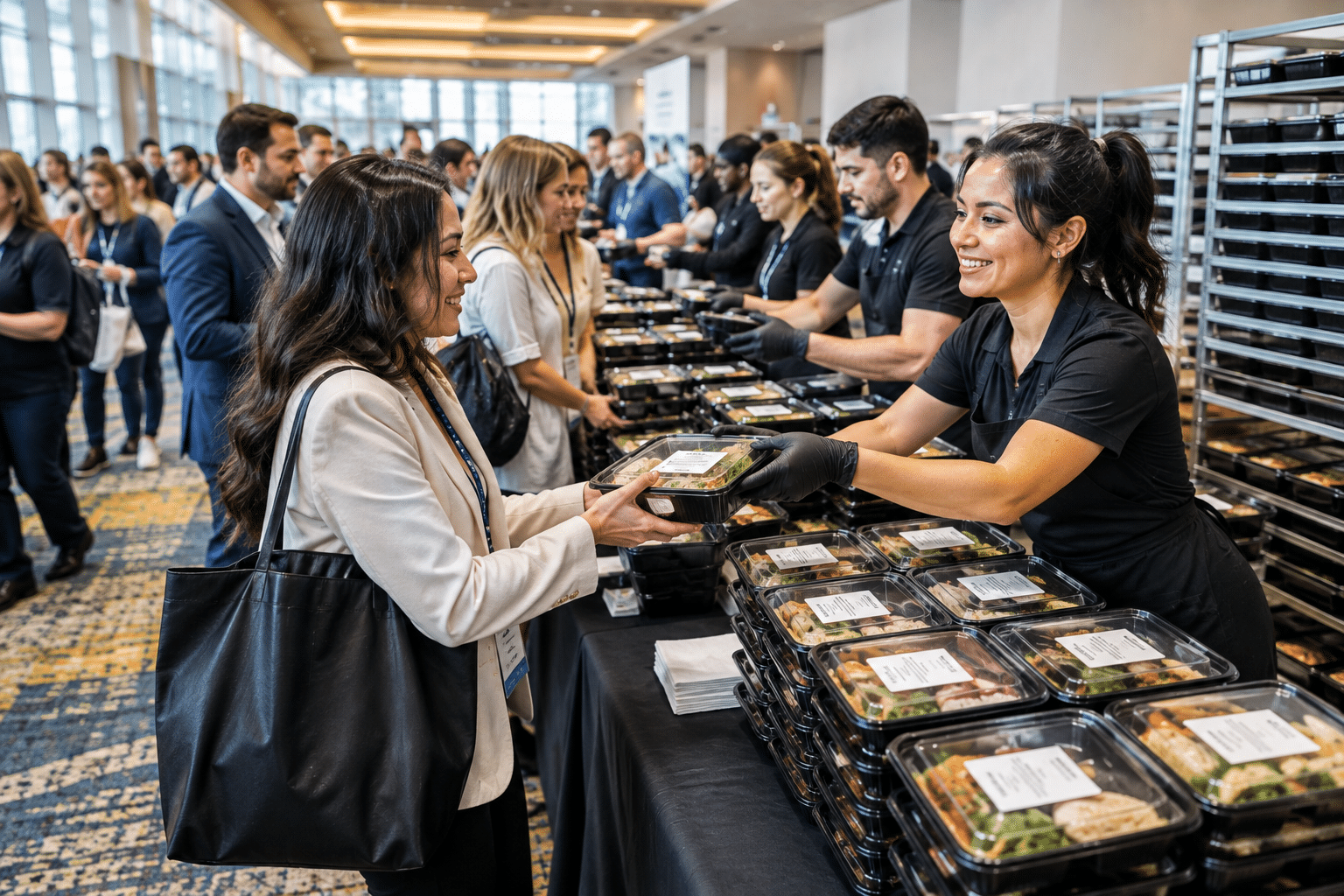
For most mid-to-large volume operators, a wholesale frozen lunch kit program is worth it because it stabilizes labor cost and plate consistency, particularly during peak or unpredictable demand periods. It’s less worth it for small, low-volume kitchens with stable staffing and a scratch-made brand identity.
The value proposition strengthens further when the manufacturer supplying the kits maintains rigorous food safety standards — FDA and USDA oversight, in Culinary Specialties’ case — since that reduces the quality-control burden on the receiving kitchen.
What Should First-Time Buyers Know Before Switching to Frozen Lunch Kits Wholesale?
First-time buyers evaluating frozen lunch kits wholesale should confirm freezer storage capacity, request sample kits before committing to volume orders, and clarify minimum order quantities and case pack sizes with the manufacturer before switching a meal program over.
A Simple Evaluation Checklist
- Confirm freezer capacity at your property before ordering in volume.
- Request samples and run a side-by-side taste and presentation test against your current menu.
- Check packaging and labeling for allergen and nutrition compliance relevant to your service (especially in healthcare and school settings).
- Ask about minimum order quantities and delivery lead times.
- Calculate true landed cost including freight, storage, and finishing labor — not just the per-unit wholesale price.
- Verify food safety certifications of the manufacturer, including FDA/USDA registration.
Why Choose Culinary Specialties for Frozen Lunch Kits Wholesale?
Culinary Specialties has operated as an FDA and USDA-approved specialty foods manufacturer and distributor for more than 25 years, supplying hotels, resorts, caterers, convention centers, country clubs, hospitals, and airlines with customized appetizers, entrées, breakfast items, and boxed lunches. That existing wholesale infrastructure — food safety compliance, packaging and delivery systems built for hospitality volume, and an established boxed lunch product line — is the same infrastructure a frozen lunch kit program needs to run reliably.
Because the company already serves multi-unit hospitality accounts (hotel groups, convention centers, and healthcare foodservice among them), properties evaluating a frozen lunch kit switch can source through a single wholesale relationship rather than qualifying a new vendor from scratch.
Frequently Asked Questions
How long can frozen lunch kits be stored before use?
Storage life depends on the specific product and packaging, but wholesale frozen foodservice items generally hold for weeks to several months under proper freezer conditions.
Can frozen lunch kits be customized for dietary restrictions?
Many wholesale manufacturers offer gluten-free, vegetarian, or vegan options within their catalog. Culinary Specialties lists gluten-free and vegan/vegetarian product categories alongside its standard menu, so operators with dietary-restricted guests can typically source compliant options from the same vendor.
What’s the minimum order for wholesale frozen lunch kits?
Minimum order quantities vary by manufacturer and product line.
Do frozen lunch kits work for healthcare foodservice?
Yes — hospitals commonly use portion-controlled frozen meal components for patient trays and staff cafeterias because standardized portioning supports nutrition tracking and consistent service across shifts.
How do I request pricing for a wholesale frozen lunch kit program?
Most wholesale foodservice manufacturers, including Culinary Specialties, handle pricing through a direct quote request based on volume, product mix, and delivery location rather than published list pricing.
Ready to Simplify Your Lunch Program?
If labor shortages, inconsistent portioning, or unpredictable group volume are straining your kitchen’s lunch service, a wholesale frozen lunch kit program can take that pressure off without cutting menu quality. Culinary Specialties already supplies hotels, convention centers, hospitals, and caterers with FDA/USDA-regulated boxed lunches and specialty foods built for high-volume hospitality service — making it a natural next step for properties ready to add frozen lunch kits to their existing wholesale order.
Partner with Us for Delicious Pasta Dishes and More
Culinary Specialties is here to help you simplify the prep process while still offering top-quality food for your clients. Give us a call at (760) 744-8220, or you can request a quote online!