



Why Your Distributor Choice Matters
Choosing the right food service distributor can make or break your restaurant, café, catering business, or food service operation in San Diego and Southern California. With regional tastes, seasonal demands, and operational logistics playing pivotal roles, partnering with the right distributor ensures smooth operations, satisfied customers, and cost-efficiency.
In this guide, we’ll explore what you need to look for in a distributor, how to evaluate your options, and key tips to make a smart, long-term decision.

Understanding Your Business Needs
Before you start searching for a distributor, it’s vital to clearly define your specific business requirements.
Key Questions to Ask:
- What types of products do you need? (Fresh produce, dairy, frozen goods, specialty items?)
- What volume of inventory do you require weekly or monthly?
- Do you need local, organic, or specialty items frequently?
- How flexible does the distributor need to be with order changes or last-minute requests?
San Diego and Southern California’s diverse culinary scene often demands specialty products like organic produce, seafood, or ethnic ingredients, which not all distributors carry. A clear picture of your needs helps streamline the selection process.
Types of Food Service Distributors
Understanding the categories of food service distributors can help you align your business with the right partner.
Common Types:
- Broadline Distributors: Offer a wide range of products, ideal for general needs and larger operations.
- Specialty Distributors: Focus on niche products such as artisan cheese, seafood, or international ingredients.
- Local Distributors: Provide locally sourced goods, often specializing in farm-to-table produce, seafood, and sustainable products.
- Cash-and-Carry Distributors: Allow you to pick up products on-demand without long-term contracts.
For Southern California businesses that emphasize freshness and sustainability, local distributors may be an ideal option.
Evaluating Product Quality & Sourcing
Product quality directly impacts your menu, customer satisfaction, and business reputation.
What to Look for:
- Sourcing Transparency: Does the distributor disclose where products come from?
- Certifications: Look for certifications such as USDA Organic, MSC Certified Seafood, or Non-GMO Project Verified.
- Sampling Options: Many distributors offer product samples—take advantage of this to assess quality firsthand.
- Product Consistency: Inconsistent product quality can lead to major operational headaches.
In regions like San Diego, where customers value local and sustainable food, verifying sourcing is essential.
Pricing, Payment Terms, and Fees
While pricing isn’t everything, it’s a significant consideration when choosing a food service distributor.
Points to Compare:
- Unit Pricing: Compare per-item costs across distributors.
- Minimum Order Requirements: Make sure order minimums align with your cash flow and storage capacity.
- Delivery Fees: Some distributors charge additional fees, especially for rush orders or remote locations.
- Payment Terms: Flexible terms (such as net 30) can support your cash flow, especially in seasonal downturns.
Balancing affordability with quality ensures long-term profitability.

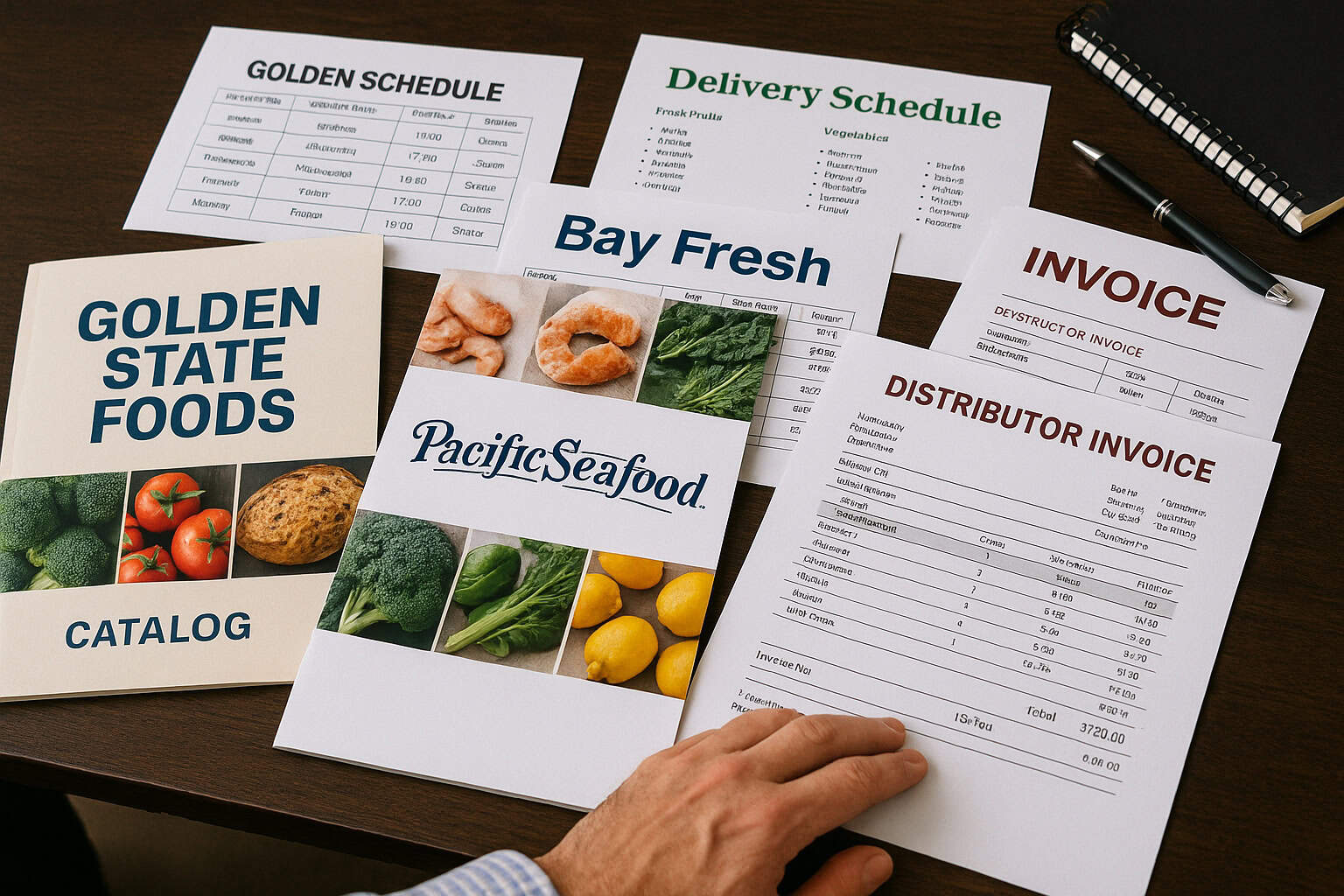
Delivery Schedules & Customer Support
Timely deliveries and responsive customer service are critical for maintaining seamless operations.
Important Considerations:
- Delivery Frequency: Ensure schedules align with your inventory turnover.
- Order Flexibility: Can orders be adjusted easily if customer demand shifts?
- Emergency Deliveries: Check if they provide last-minute or same-day options.
- Customer Support: A dedicated account manager or responsive service line can save time and stress.
Southern California’s fast-paced food industry thrives on speed and flexibility—make sure your distributor can keep up.
Long-Term Partnership & Technology Integration
Think beyond the initial contract—evaluate the distributor’s ability to grow with your business.
Features to Look For:
- Online Ordering Systems: Streamlined digital ordering can save time and reduce errors.
- Inventory Management Tools: Some distributors offer apps or systems to help manage stock levels.
- Sustainability Initiatives: If eco-friendly practices matter to your business, check their policies on waste reduction and packaging.
- Reputation & Reviews: Read reviews from other local businesses and ask for referrals.
A distributor that leverages technology and aligns with your future growth can be a powerful partner.
Conclusion: Making the Final Choice
Choosing the right food service distributor isn’t just about price—it’s about finding a reliable partner that supports your vision, delivers consistently high-quality products, and provides excellent service. For businesses in San Diego and Southern California, balancing local sourcing, pricing, and service flexibility is especially important.
Take your time to vet potential partners, ask detailed questions, and negotiate terms that suit your business. The right distributor will fuel your growth and help you exceed customer expectations.