


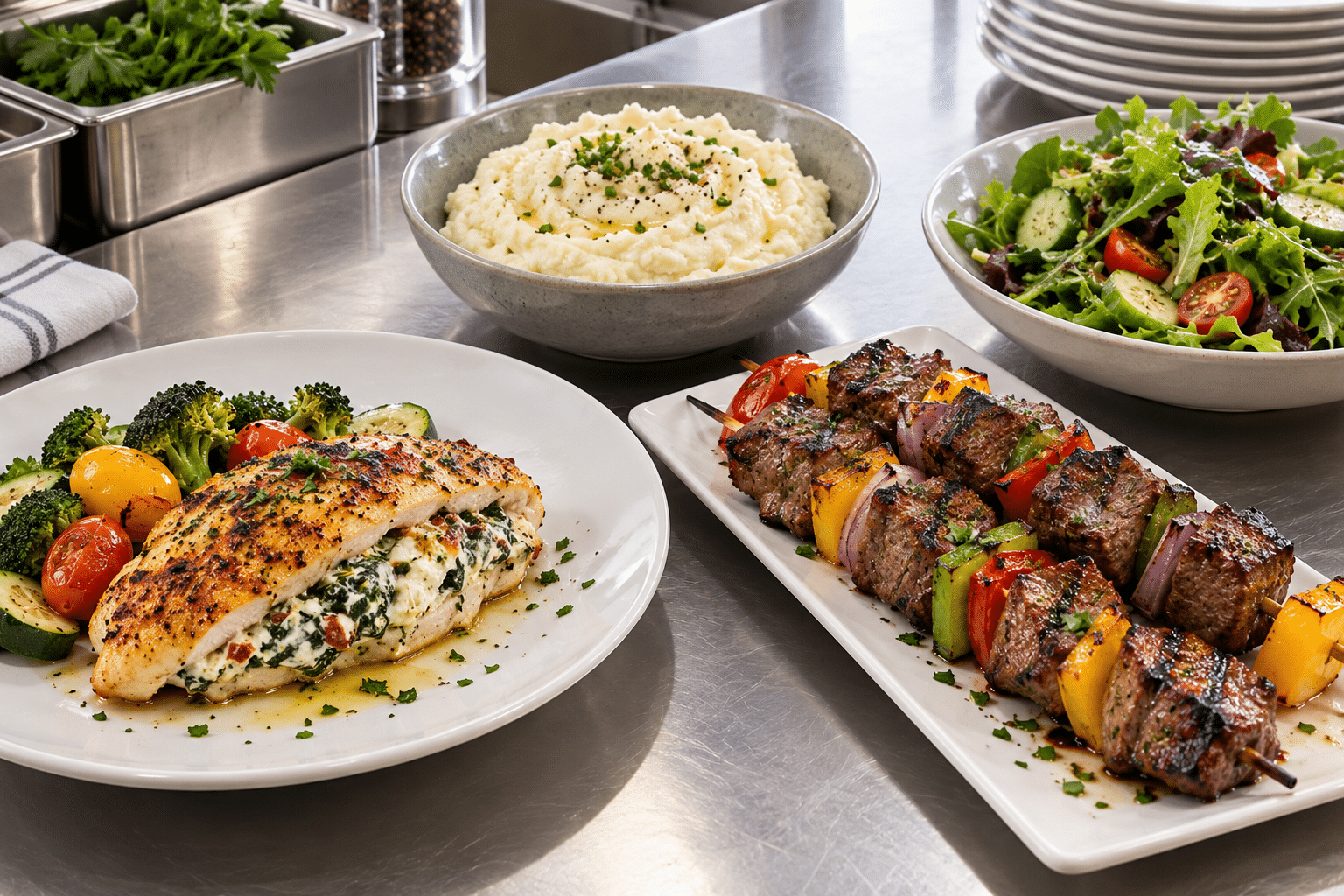
Buying keto frozen meals wholesale lets foodservice operators serve a growing low-carb customer base without adding kitchen labor. Portioned frozen keto entrees and appetizers give hotels, caterers, cafes, and corporate dining programs consistent carb counts, predictable food cost, long freezer life, and less waste. That combination makes it practical to add a dedicated dietary menu category quickly, test it with real customers, and scale it as demand grows.
Culinary Specialties is a USDA- and FDA-approved, SQF-certified food manufacturer in San Marcos, California, that has produced frozen appetizers and entrees for hotels, caterers, convention centers, and hospitals since 1996. It does not currently list a dedicated keto line, but it produces custom items to chef specifications, offers a gluten-free collection built around proteins like bacon-wrapped shrimp and beef brochettes, and ships wholesale nationwide. Visit culinaryspecialties.net for current offers and to request a quote.
Quick Takeaways
- Keto frozen meals wholesale help operators capture low-carb diners without hiring extra prep staff or buying specialty ingredients in small, expensive quantities.
- The global ketogenic diet food market was valued at about 10.4 billion dollars in 2025, and North America holds the largest regional share.
- Consistent carb counts from plate to plate are what earn repeat keto customers, and portioned frozen items deliver that consistency.
- The FDA has no definition of “keto” on a label, so request spec sheets with carb, fiber, fat, and protein data before you print menu claims.
- Start with three to five items, track sales for 60 to 90 days, then expand the winners into catering and grab-and-go.
What Are Keto Frozen Meals Wholesale?
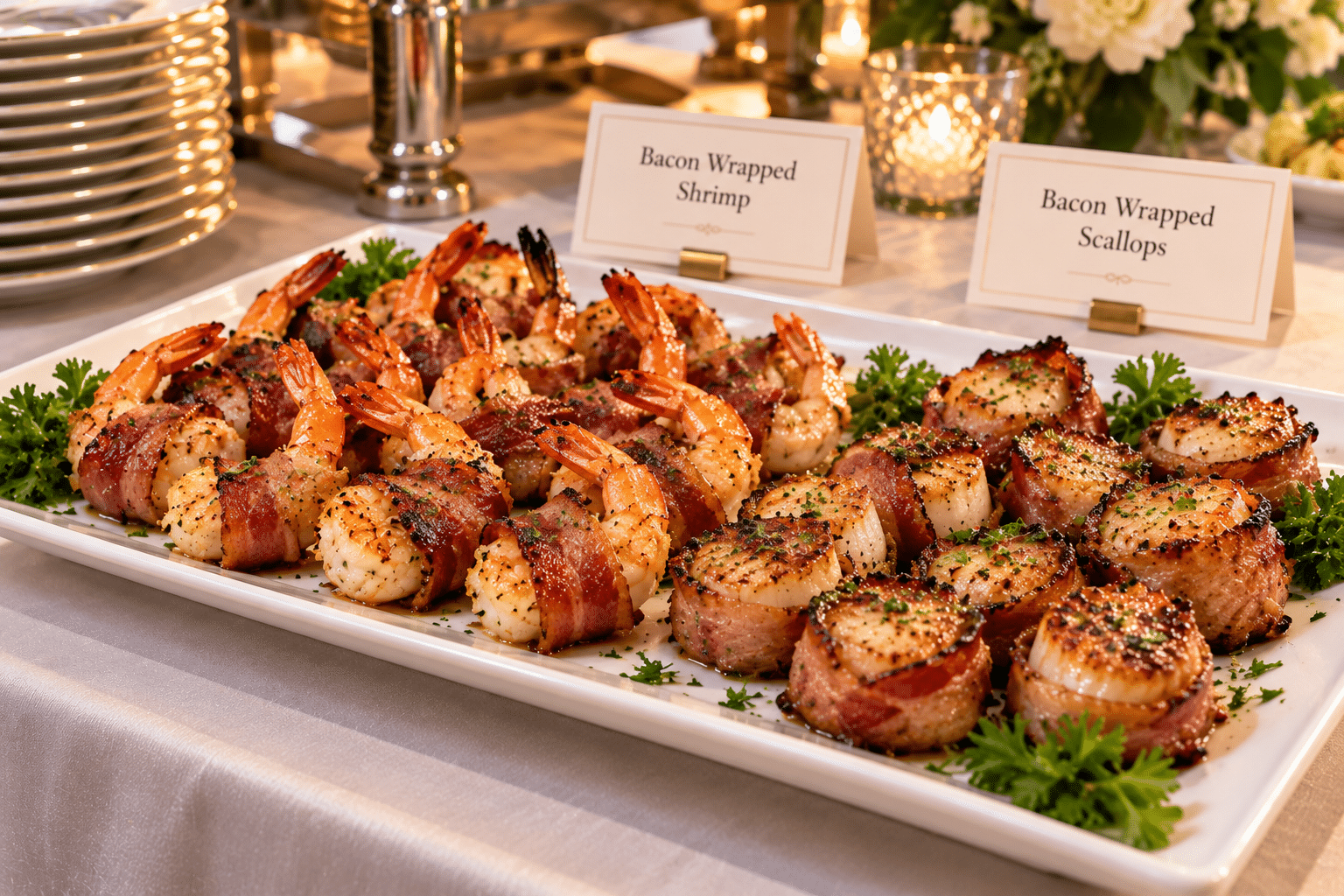
Keto frozen meals wholesale are low-carb, higher-fat entrees, appetizers, and sides that manufacturers produce, freeze, and sell by the case to restaurants, hotels, caterers, and other foodservice buyers. Instead of building keto dishes from scratch, operators receive portioned, ready-to-heat items with documented nutrition, then finish and plate them in their own kitchens.
A standard ketogenic diet typically limits carbohydrates to roughly 20 to 50 grams per day. That narrow window is why sourcing matters. A guest following keto needs to trust that your stuffed chicken breast lands in the same carb range every time.
Most wholesale keto programs are built on protein-centered entrees, appetizers such as bacon-wrapped seafood and breadcrumb-free meatballs, and vegetable sides based on cauliflower, zucchini, or greens.
Why Is Demand for Keto Meals Still Growing?
Demand for keto food continues to grow because health-conscious consumers want convenient options for weight management and blood sugar control. Market research firm IMARC Group valued the global ketogenic diet food market at about 10.4 billion dollars in 2025 and projects roughly 16.3 billion dollars by 2034, with North America accounting for more than a third of sales.
For foodservice operators, that growth shows up in practical ways. Event planners send dietary requirement lists with catering orders, business travelers ask for low-carb room service, and corporate wellness programs request carb labeling.
Many operators still treat keto as an afterthought, offering a bunless burger and calling it done. A thoughtful keto selection, even a small one, gives you something competitors often lack. Many keto dishes are also naturally gluten-free, so one menu section can serve several customer groups at once.
How Do Wholesale Keto Frozen Meals Increase Revenue?
Wholesale keto frozen meals increase revenue by opening a new customer segment, raising average check size, and making dietary requests profitable instead of disruptive. Because the items arrive portioned and documented, operators can price them confidently, sell them across dining, catering, and grab-and-go channels, and avoid the labor cost of one-off special orders during service.
Keeping the Whole Table
When one person in a group follows keto, the party often picks a venue based on whether that person can eat well. A clearly marked keto section removes that objection.
Supporting Premium Pricing
Keto dishes lean on proteins, cheeses, and healthy fats, so guests expect them to cost more. A known wholesale cost per portion lets you price for margin while staying fair.
Turning Catering Requests Into Upsells
With keto appetizers in your freezer, you can say yes to a low-carb station immediately and quote the add-on instead of scrambling or declining.
Expanding Into Grab and Go
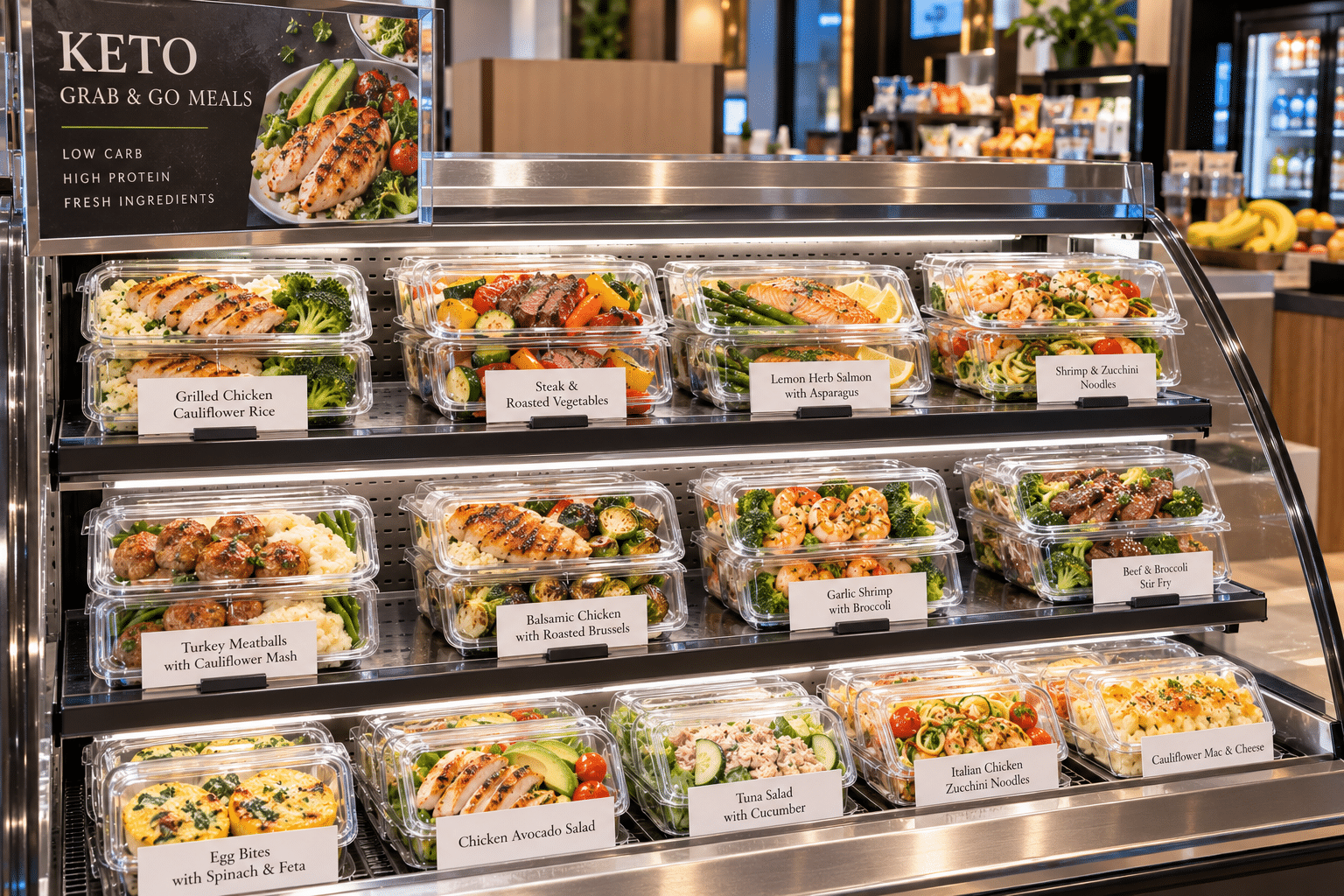
Frozen keto entrees can be heated, packaged, and sold in hotel markets, hospital cafes, and corporate micro markets, extending revenue beyond dining room hours.
How Do Frozen Keto Meals Reduce Labor and Food Waste?
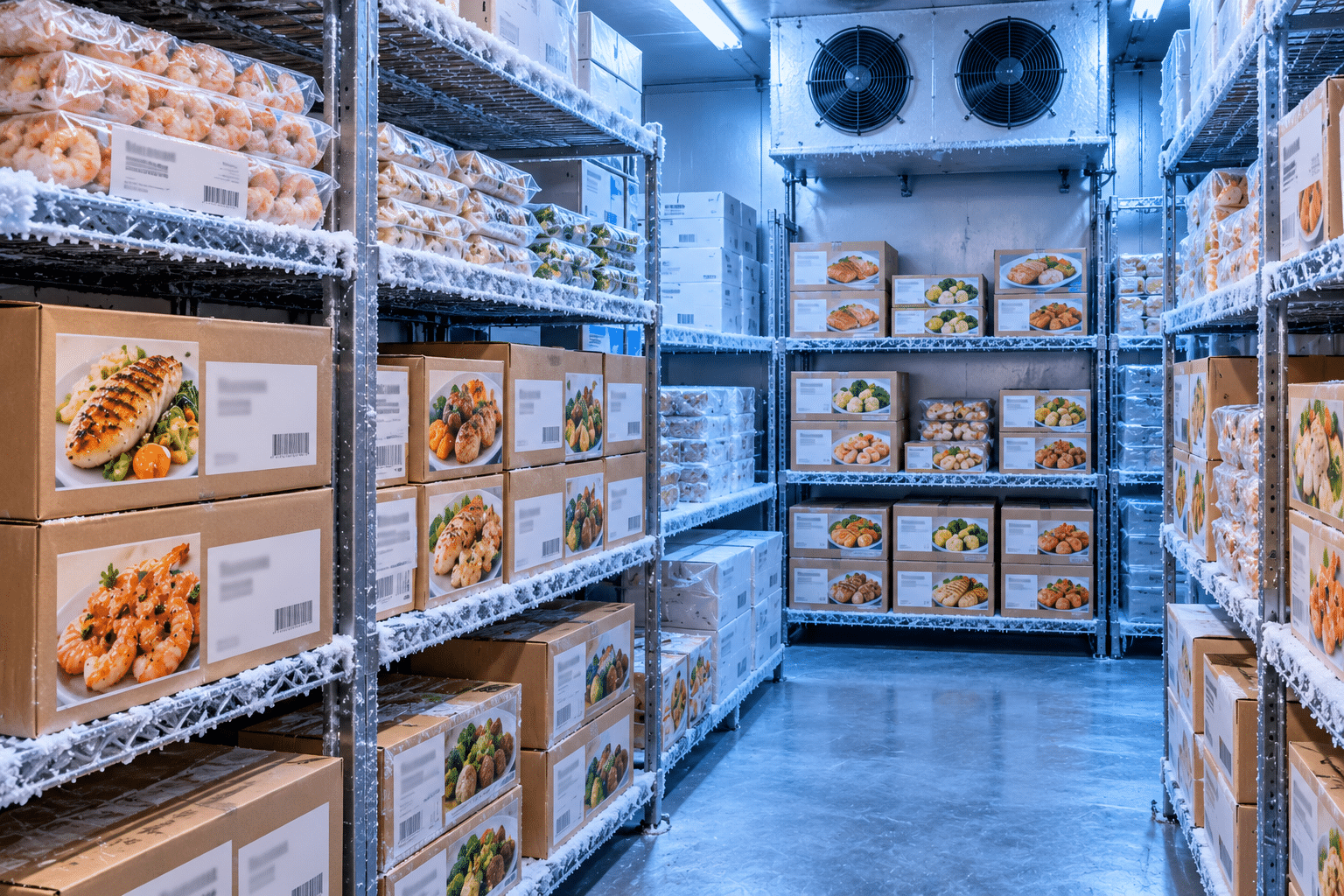
Frozen keto meals reduce labor because the manufacturer handles prep, portioning, and cooking, so your team only heats, finishes, and plates. They reduce waste because individually frozen pieces let you pull exactly what each order needs. Unused portions stay frozen instead of spoiling, which matters for specialty items that may sell slowly at first.
Scratch keto cooking is surprisingly labor intensive. Almond flour coatings, cauliflower rice, and sugar-free sauces require extra steps and ingredients most kitchens do not stock in volume.
Individually quick frozen, or IQF, products solve much of this. A cook can pull six bacon-wrapped shrimp for one plate or six hundred for a reception without thawing a whole case. According to the USDA, food kept frozen at 0°F remains safe indefinitely, although quality is best within the manufacturer’s recommended window. That gives you room to test a new item without the pressure of a short shelf life.
What Should You Look for in a Keto Frozen Meal Supplier?
Look for a supplier with recognized food safety certifications, documented nutrition and allergen data for every item, consistent portioning, reliable frozen delivery, and the ability to customize recipes. A good supplier should also explain how it calculates net carbs and disclose sweeteners, starches, or binders in each product.
| What to Check | Why It Matters |
|---|---|
| SQF, USDA, and FDA compliance | Confirms audited food safety and inspected production |
| Full spec sheets per item | You need carbs, fiber, fat, protein, and allergens to label menus accurately |
| Portion consistency | Keto guests notice when carb counts drift between orders |
| Ingredient transparency | Hidden sugars, starches, or breadcrumbs can take an item out of keto range |
| Custom recipe capability | Lets you adjust sauces, sizes, or coatings to fit your concept |
| Cold chain and delivery coverage | Protects texture and safety from plant to freezer |
Always ask for samples and cook them exactly as your line will. A keto item that tastes like a compromise will not earn repeat orders, no matter how good the macros look on paper.
Which Keto Formats Work Best for Different Operations?
The best keto format depends on how you serve food. Hotels and banquet operations usually benefit most from passed appetizers and plated proteins, cafes and markets from single-serve entrees, and caterers from versatile items that work on platters or stations. Matching format to service style keeps labor low and quality high.
| Operation | Recommended Keto Format | Why It Works |
|---|---|---|
| Hotel banquets and weddings | Bacon-wrapped seafood, beef, or chicken brochettes | Easy to pass, holds well on trays, feels upscale |
| Restaurants | Stuffed chicken breast, grilled proteins, cauliflower sides | Fits plated service with minimal finishing |
| Catering companies | Skewers, breadcrumb-free meatballs, cheese-based bites | Works across platters, stations, and boxed meals |
| Hospital and corporate cafes | Single-serve entrees with labeled nutrition | Supports grab-and-go and wellness labeling |
| Convention centers | High volume protein appetizers | Scales quickly for large receptions |
One note for hospitals: clinical ketogenic diets, such as those used for epilepsy, follow strict medical protocols and should be approved by the facility’s registered dietitians. Staff and visitor cafes can use standard keto menu items.
How Should You Label and Market Keto Menu Items?
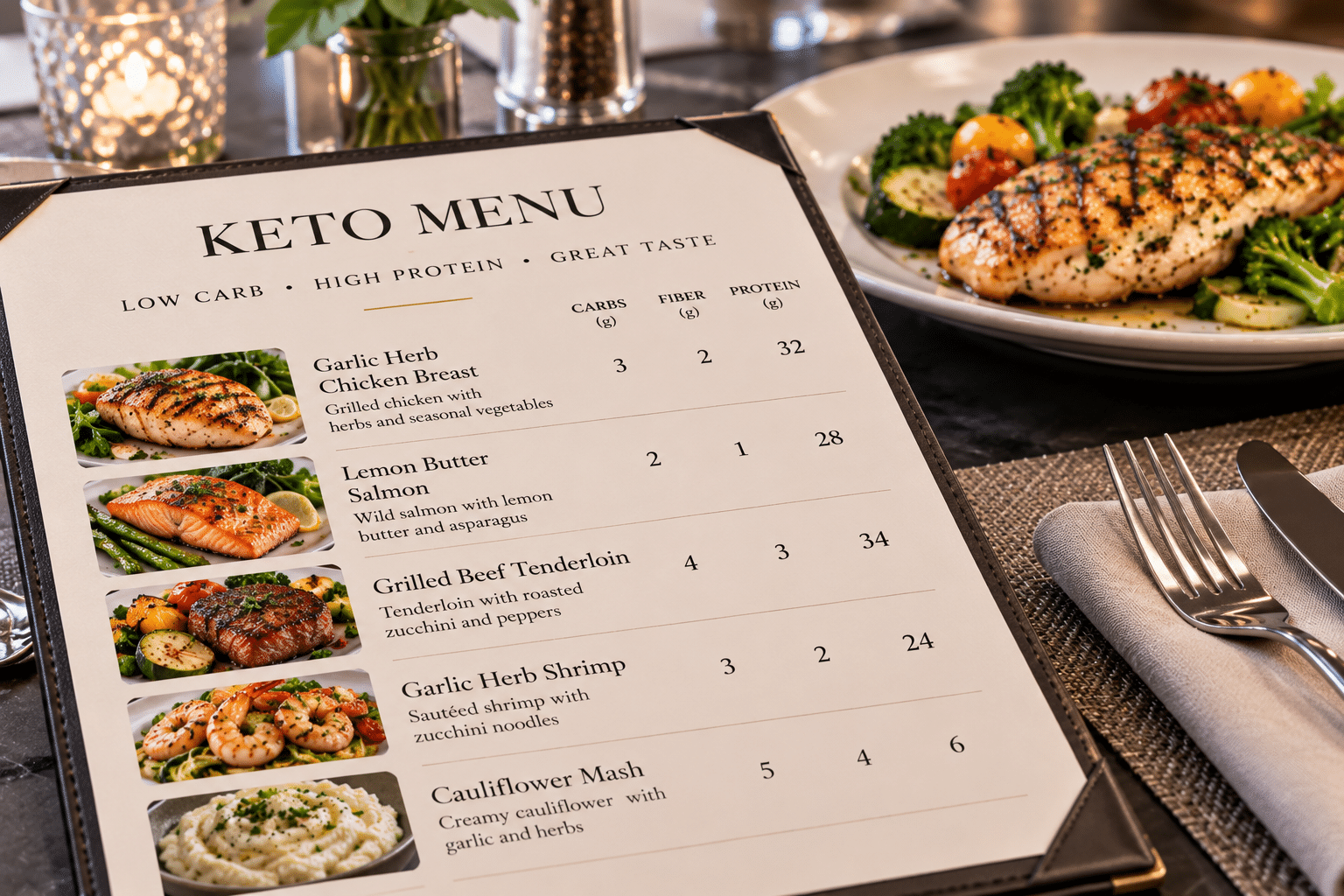
Label keto menu items using verified nutrition data from your supplier. The FDA has not defined “keto” or “net carbs” as regulated label terms, so the safest approach is to publish actual carbohydrate, fiber, and protein numbers. Clear labeling builds trust with keto diners and protects your business from misleading claims.
- Show the numbers. Total carbs, fiber, and net carbs per serving let guests decide.
- Flag allergens. Keto recipes often rely on dairy, eggs, and tree nuts.
- Watch the sides. A keto entree served with a starchy side or sweet glaze is no longer keto.
- Train your team. Servers should know which items qualify and which substitutions keep a dish low carb.
Group keto items under one menu heading and add them to catering proposals and online ordering filters. Specific, accurate descriptions help search engines and AI assistants surface your business for searches like “keto catering near me.”
How Do You Launch a Keto Menu Line Successfully?
Launch a keto menu line by starting with three to five proven items, testing them in one service channel, tracking sales for 60 to 90 days, then expanding the best performers. This limits inventory risk, gives your team time to learn new products, and produces real data about what customers actually buy.
- Survey demand in catering requests, guest comments, and special order logs.
- Request samples and spec sheets, then confirm cooking methods and nutrition.
- Price for margin using cost per portion, including garnish and packaging.
- Launch in one channel, such as catering or a single outlet, and track units sold and waste weekly.
- Scale the winners into additional outlets, events, and grab-and-go.
Looking for a Wholesale Frozen Food Partner for Dietary Menus?
Culinary Specialties does not currently offer a dedicated keto product line, but it is a strong fit for operators who want to build a low-carb menu with a manufacturer that works directly with chefs. Founded in 1996, the company now operates a USDA- and FDA-approved, SQF-certified production facility in San Marcos, a history also documented in its California Manufacturing Technology Consulting Made in California profile.
- Custom production. The company built its reputation producing specialty items to each chef’s exact specifications.
- Gluten-free protein items. Its gluten-free collection of about 40 items includes bacon-wrapped shrimp, bacon-wrapped scallops, bacon-wrapped cheese-stuffed jalapeños, and beef or chicken brochettes with bell peppers and onions. Request spec sheets to confirm which fit your carb targets.
- Dietary menu experience. The executive chef at the San Diego Zoo has relied on Culinary Specialties for custom appetizers and specialty vegetarian and vegan entrees since 2008.
- IQF packaging and food safety. Products are individually quick-frozen and hand-packed, backed by HACCP plans, third-party audits, and microbiological testing of finished products.
- National reach. Wholesale customers include Hilton, Hyatt, Marriott, Ritz-Carlton, and Four Seasons, and the company can deliver anywhere in the United States.
Frequently Asked Questions
Are wholesale keto frozen meals profitable for small restaurants?
Yes, when you start small. Wholesale pricing lowers your cost per portion compared with buying specialty keto ingredients in small quantities, and frozen storage means slow sellers do not spoil. Most small restaurants do best by adding two or three keto items, pricing them as premium dishes and tracking results for a few months before expanding.
Can I get custom keto recipes made for my menu concept?
Many specialty food manufacturers produce custom items to chef specifications, which can include low carb changes such as removing breadcrumbs or adjusting sauces. Culinary Specialties is known for producing items to each chef’s specifications. Contact the company directly to discuss formulation, order minimums, and lead times for a custom low-carb item.
What keto items sell best at catered events?
Protein-based appetizers that are easy to eat standing up usually perform best at events. Bacon-wrapped seafood, beef and chicken skewers, cheese-stuffed vegetables, and breadcrumb-free meatballs are popular because they feel indulgent, hold well on trays, and fit low-carb guidelines when sauces and glazes are chosen carefully.
Is gluten free the same as keto?
No. Gluten-free foods avoid wheat, barley, and rye, while keto limits total carbohydrates from every source. A gluten-free item can still be high in carbs from rice, potatoes, or sugar. Many keto foods happen to be gluten-free, but always check the full nutrition panel before labeling a gluten-free item as keto.
Build Your Low Carb Menu with Culinary Specialties
Adding keto frozen meals wholesale is one of the most practical ways to win low-carb diners, simplify dietary catering requests, and grow average check size without adding labor. While Culinary Specialties does not currently list a dedicated keto line, its chef-driven custom production, gluten-free protein appetizers, SQF-certified facility, and nationwide wholesale delivery give foodservice operators a reliable starting point for a low-carb program. Visit culinaryspecialties.net to see current promotions and limited-time offers, explore the gluten-free and entree collections, and talk with the team about items that fit your menu.
Partner with Us for Delicious Pasta Dishes and More
Culinary Specialties is here to help you simplify the prep process while still offering top-quality food for your clients. Give us a call at (760) 744-8220, or you can request a quote online!