


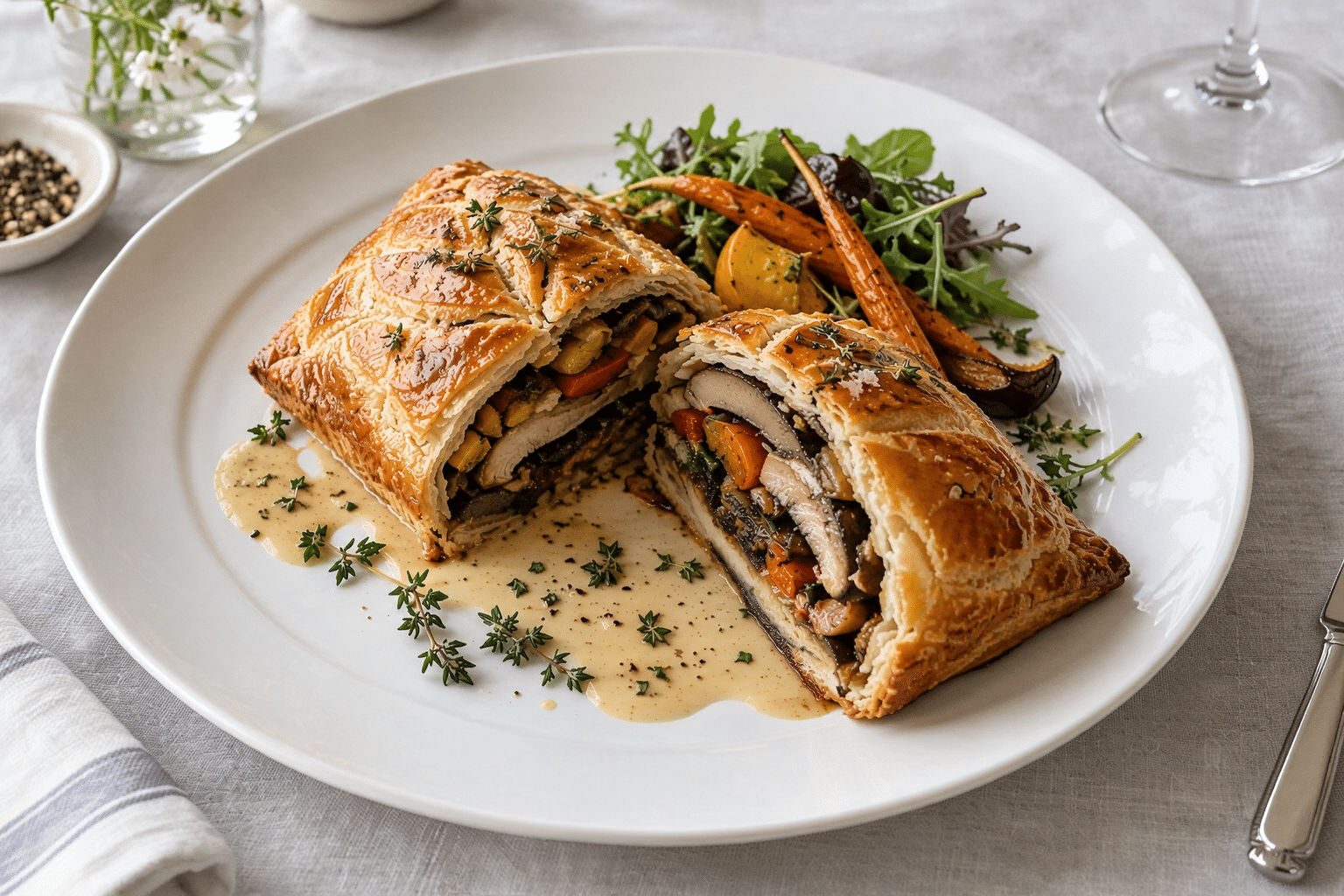
The right vegetarian meal supplier proves food safety with third-party certification, clearly labels vegan and vegetarian items with allergens listed, offers enough variety to cover your menu, freezes and ships product without losing quality, and can adjust recipes to your specifications. Before committing, request samples, case counts, and delivery terms, then test the product in a small run with your own staff and guests.
Culinary Specialties is a vegetarian meal supplier and specialty food manufacturer based in San Marcos, California, producing vegan and vegetarian entrées for hotels, caterers, convention centers, hospitals, and airlines since 1996. Its vegetarian line includes Vegan Eggplant Rollatini, Portobello Mushroom and Vegetable En Croute, and Ratatouille Vegetables in Phyllo, all made in an SQF-certified, USDA- and FDA-approved facility. Visit culinaryspecialties.net to request a quote and ask about current wholesale pricing.
Quick Takeaways
- Start with food safety. Look for SQF certification, USDA and FDA oversight, HACCP plans, and third-party audits.
- Confirm exactly what “vegetarian” means on every spec sheet, since many vegetarian items still contain dairy, eggs, or soy.
- Match the supplier’s range to your service style, whether that is passed appetizers, plated banquet entrées, or boxed lunches.
- Quick frozen vegetarian entrées can hold texture and color well when the supplier freezes immediately after cooking.
- Ask how product travels. Daily truck inspections and verified transport temperatures protect what you paid for.
- Suppliers that build recipes to a chef’s specifications give you menu items your competitors cannot simply order from a catalog.
What Does a Vegetarian Meal Supplier Actually Do?
A vegetarian meal supplier manufactures meatless entrées, appetizers, and sides in volume and sells them wholesale to foodservice operators. Instead of prepping every vegetarian dish from scratch, a hotel, caterer, or hospital buys finished or near-finished items, stores them, and heats or plates them on site. The goal is consistent quality, predictable cost, and less kitchen labor.
Broadline distributors carry products from many brands but rarely make anything themselves, while specialty manufacturers produce their own recipes and offer more control over ingredients and presentation. If you need one meatless banquet option, a broadline catalog may be enough. If vegetarian guests are a growing share of your covers, a specialty manufacturer usually delivers better quality and flexibility.
What Food Safety Certifications Should a Vegetarian Meal Supplier Have?
A reliable vegetarian meal supplier should hold a GFSI-recognized certification such as SQF, operate under USDA or FDA oversight, and follow a documented HACCP plan. These standards show the facility identifies hazards, controls critical steps like cooking and cooling, and gets audited by outside inspectors rather than grading itself.
Vegetarian food is not automatically low risk. Leafy greens, sprouts, soft cheeses, and cooked rice all carry well-known contamination risks, and a facility that also handles meat must prevent cross-contact on shared lines.
Here is what to request during vetting:
- A current SQF or equivalent certificate with the audit date
- Confirmation of USDA or FDA registration and inspection status
- A summary of the HACCP plan and sanitation procedures
- Results or frequency of finished product microbiological testing
- The supplier’s recall procedure and how quickly customers are notified
If a supplier hesitates to share any of these, treat that as a warning sign.
How Do You Tell Vegan and Vegetarian Products Apart on a Spec Sheet?
Vegetarian products exclude meat, poultry, and seafood but may contain dairy, eggs, or honey. Vegan products exclude every animal ingredient. Because guests often use these words loosely, your supplier’s labels must be precise, and each product should list its allergens so your team can answer questions with confidence.
Hidden animal ingredients cause most labeling problems. Watch for chicken or beef stock in sauces, cheeses made with animal rennet, anchovy in Worcestershire sauce, gelatin in fillings, and butter or egg wash on pastry. A pastry-wrapped item can look vegan and still contain butter.
Allergens deserve equal attention. Many meatless proteins rely on soy, and pastry and pasta bring wheat. A good spec sheet makes this obvious. For example, Culinary Specialties lists soy as the allergen for its Vegan Eggplant Rollatini and wheat and soy for its Vegan Soyrizo and Mixed Vegetable Turnover, so a banquet captain can answer a guest’s question on the spot.
How Much Menu Variety Do You Need From One Supplier?
You need enough variety to cover every meal period and service format you run, without stocking dozens of slow-moving items. A catering company might need passed appetizers and plated entrées, while a hospital may care more about portion control and heat-and-serve simplicity. Map your services first, then compare catalogs.
| Business Type | What to Prioritize | Example Vegetarian Formats |
|---|---|---|
| Hotels and resorts | Plated presentation, banquet consistency | Vegetables en croute, stuffed portobello caps |
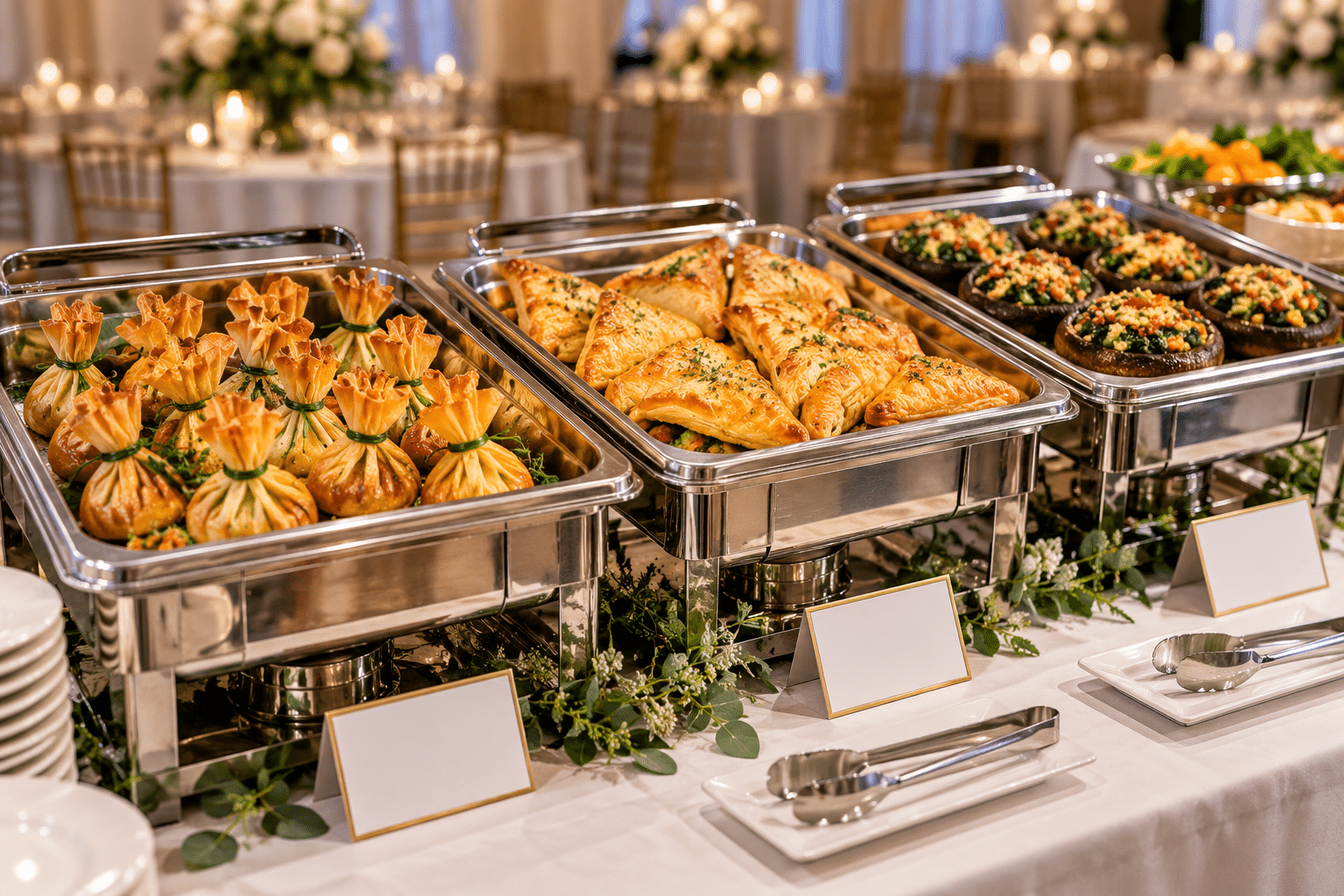
| Caterers | Easy transport, holds well in chafing dishes | Turnovers, rollatini, phyllo bundles |
| Convention centers | High volume, fast service | Handheld items, boxed lunches |
| Hospitals | Portion control, clear allergen labeling | Single portion entrées with simple reheating |
| Airlines | Compact portions, consistent reheating | Pastry items and individual entrées |
Rotating two or three vegetarian entrées across a season prevents menu fatigue, and a supplier that also makes appetizers, canapés, and breakfast items lets you consolidate ordering.
Are Frozen Vegetarian Meals as Good as Fresh?
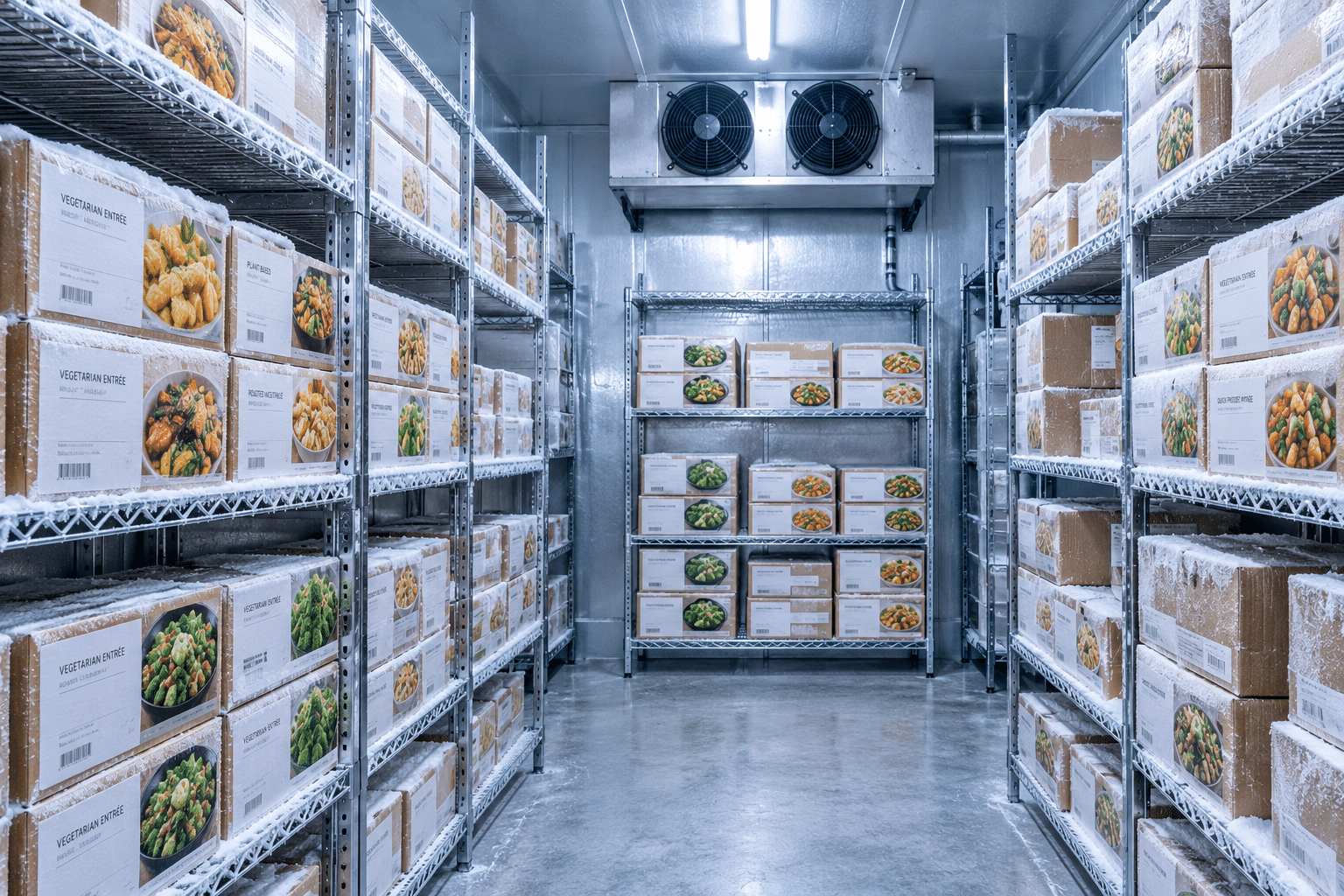
Frozen vegetarian meals can match fresh quality when the supplier freezes product quickly after cooking. Individually quick-frozen items form smaller ice crystals, which help vegetables keep their color and bite and keep pastry from turning soggy. The bigger risks come later, from temperature swings in transit or poor storage in your own freezer.
Freezing also extends usable life, cuts waste, and lets you pull exactly the portions you need, whether for a 12-guest lunch or a 900-person gala.
Ask how soon product is frozen after cooking and how it is packed to prevent freezer burn, then test it in your own ovens. Vegetables should look bright, sauces should not separate, and pastry should bake up crisp.
What Should You Ask About Delivery and Cold Chain Control?
Ask whether the supplier runs its own trucks or relies on third-party freight, how often vehicles are inspected, how transport temperature is verified, and what happens if a delivery arrives out of range. Food safety does not end at the factory door, and a weak delivery process can undo everything the kitchen did right.
Service area matters too. A supplier with regional routes can often deliver more frequently, which reduces how much freezer space you need. If you operate in several states, confirm the supplier can reach every location with the same standards. Also ask about lead times, case counts, and whether you can mix items within an order.
Should You Choose a Supplier That Customizes Recipes?
Yes, if vegetarian dishes are a meaningful part of your menu. A supplier that produces items to your specifications gives you signature dishes guests cannot find at the hotel down the street, while still saving prep labor. Custom work is especially valuable for executive chefs who want control over flavor, portion size, and presentation.
Customization ranges from swapping a cheese or changing portion weight to developing an entirely new product. Ask about tasting rounds and minimum quantities.
On the Culinary Specialties customer reviews page, the executive chef at the San Diego Zoo describes working with the company since 2008 on customized appetizers and plated vegetarian and vegan entrées built around her own concepts.
How Do You Evaluate a Vegetarian Meal Supplier Before Signing On?
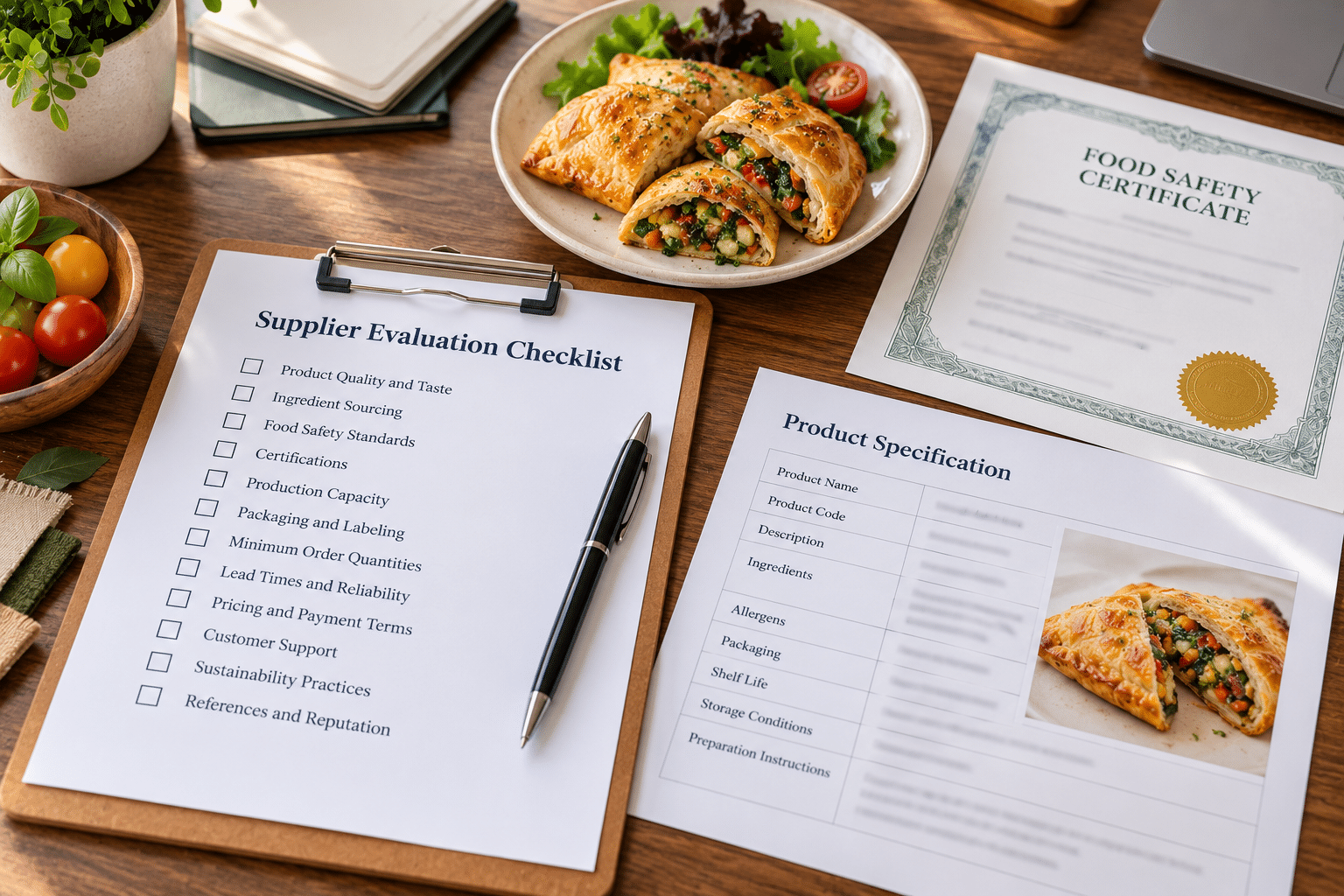
The most reliable way to evaluate a vegetarian meal supplier is a structured trial: verify paperwork, taste samples under real service conditions, place a small initial order, and review the results with your team. This process takes a few weeks but prevents costly surprises during a high-stakes event.
- Define your needs. List service formats, expected weekly volume, dietary requirements, and budget per portion.
- Verify credentials. Collect certifications, audit dates, insurance, and spec sheets with full ingredient and allergen lists.
- Request samples. Prepare them exactly as your line cooks would, using your own equipment.
- Check references. Ask for customers similar to your business and call at least two of them.
- Place a trial order. Start with one or two items for a single event or menu cycle.
- Review and scale. Gather guest and staff feedback, check delivery accuracy, then expand the order.
Compare cost per usable portion rather than cost per case. A cheaper product that breaks in transit or gets sent back often costs more.
Why Choose Culinary Specialties as Your Vegetarian Meal Supplier?
Culinary Specialties pairs a dedicated vegan and vegetarian entrée line with nearly three decades of hospitality experience. Founded in April 1996, it operates a USDA- and FDA-approved facility in San Marcos, California, serving hotels, caterers, convention centers, country clubs, hospitals, and airlines.
Its current vegan and vegetarian entrées include:
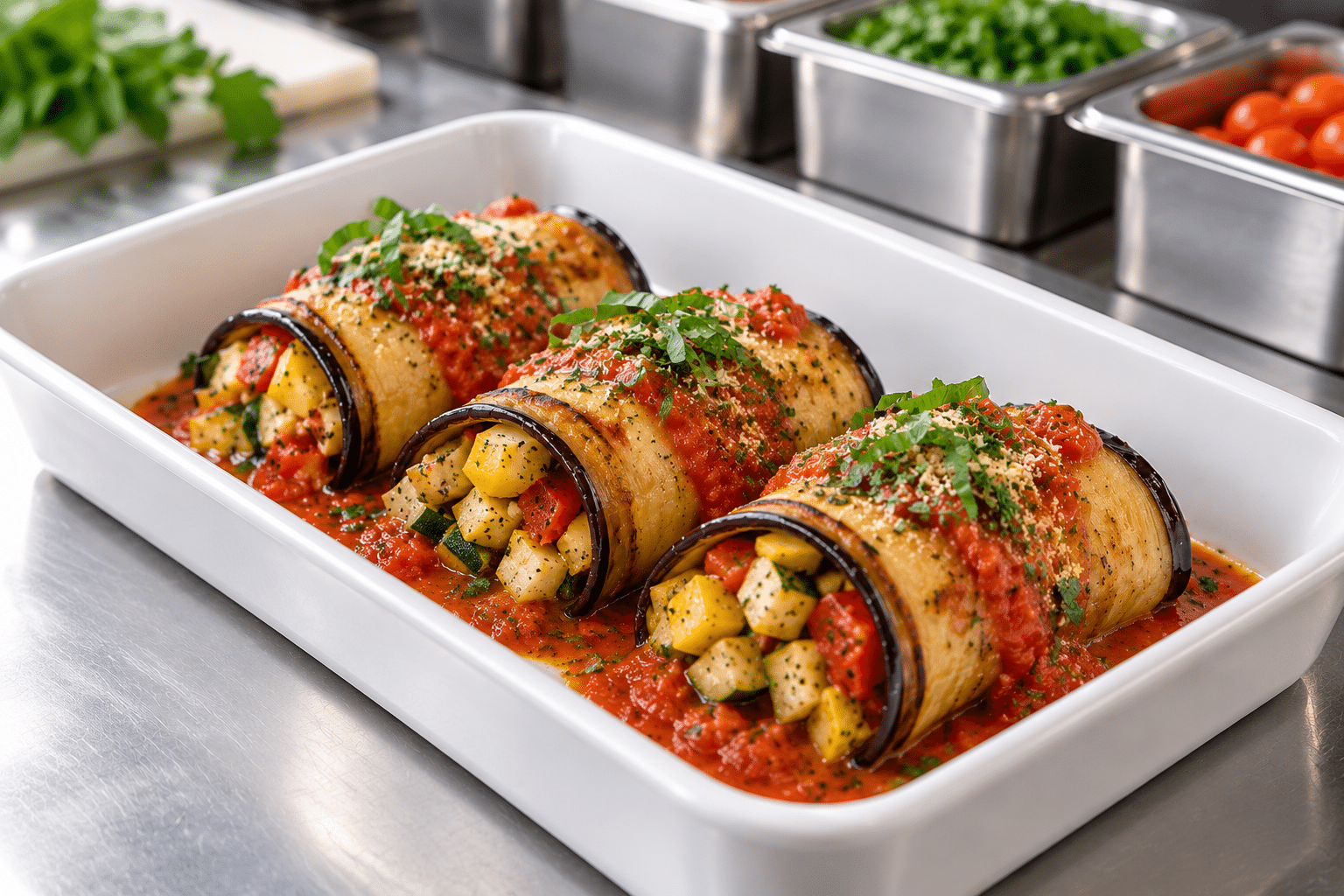
- Vegan Eggplant Rollatini, roasted eggplant filled with zucchini, yellow squash, onions, tomatoes, garlic, and herbs, about 3 ounces each and packed 30 per case
- Vegan Soyrizo and Mixed Vegetable Turnover, wrapped in puff pastry
- Portobello Mushroom and Vegetable En Croute
- Ratatouille Vegetables in Phyllo
- Stuffed Portobello Mushroom Cap with Ratatouille and Goat Cheese
- Vegetable Crepes with Feta Cheese
- Parmesan and Ricotta Manicotti Shells
On food safety, the company lists SQF certification, USDA and FDA compliance, HACCP, sanitation and good manufacturing practices, third-party audits, and microbiological testing of finished products. Items are individually quick-frozen right after preparation and hand-packed, and the delivery fleet is inspected daily, with transport temperatures verified.
The company distributes across California, Las Vegas, Arizona, Colorado, Texas, South Florida, and Hawaii, and can ship wholesale orders anywhere in the United States; this service area is also listed in the Made in California manufacturer directory and FoodCoDirectory. Its wholesale page names Disney, Hilton, Hyatt, Marriott, Ritz-Carlton, and Four Seasons among its partners. For current wholesale pricing and available offers, request a quote through culinaryspecialties.net.
Frequently Asked Questions
What is the difference between a vegetarian meal supplier and a food distributor?
A vegetarian meal supplier that manufactures its own products controls recipes, ingredients, and production standards directly. A food distributor resells products from many manufacturers and focuses on logistics and catalog breadth. Manufacturers usually offer deeper product knowledge and customization, while distributors offer one-stop ordering across many categories.
Can one supplier handle both vegan and vegetarian menu needs?
Yes, many specialty manufacturers produce both. The key is clear labeling, so your staff knows which items are fully vegan and which contain dairy or eggs. Ask for a catalog or spec sheets that separate the two categories and list allergens for every item.
How do I know if a vegetarian entrée is truly free of animal ingredients?
Read the full ingredient list on the spec sheet rather than relying on the product name. Check sauces, stocks, cheeses, pastry and fillings, then ask the supplier to confirm in writing. For vegan claims, confirm that no dairy, eggs, honey, gelatin, or animal-based stocks are used anywhere in the recipe.
How long does it take to switch to a new vegetarian meal supplier?
Most businesses can complete vetting, sampling, and a trial order within a few weeks, depending on how quickly paperwork and samples arrive. Plan the switch before a busy season, so your team learns heating and plating steps on regular service rather than a major event.
Ready to Add Vegetarian Entrées to Your Menu?
Finding a vegetarian meal supplier you can trust should not slow down your kitchen. Culinary Specialties produces vegan and vegetarian entrées in an SQF-certified, USDA- and FDA-approved facility, freezes each item right after preparation, and delivers to hotels, caterers, convention centers, hospitals, and airlines nationwide. Whether you need a dependable banquet entrée or a custom dish, the team works directly with chefs. Request a quote today to discuss products, quantities, delivery dates, and current wholesale pricing.
Partner with Us for Delicious Pasta Dishes and More
Culinary Specialties is here to help you simplify the prep process while still offering top-quality food for your clients. Give us a call at (760) 744-8220, or you can request a quote online!