




The right wholesale dessert manufacturer partnership comes down to five things: verified food safety certifications, consistent batch-to-batch product quality, cold-chain logistics that protect frozen or perishable goods in transit, pricing that scales sensibly with order volume, and the flexibility to customize portions or private-label products. Operators get the most value when a manufacturer can supply reliably at growing volume without the taste or presentation slipping.
How This Relates to Culinary Specialties
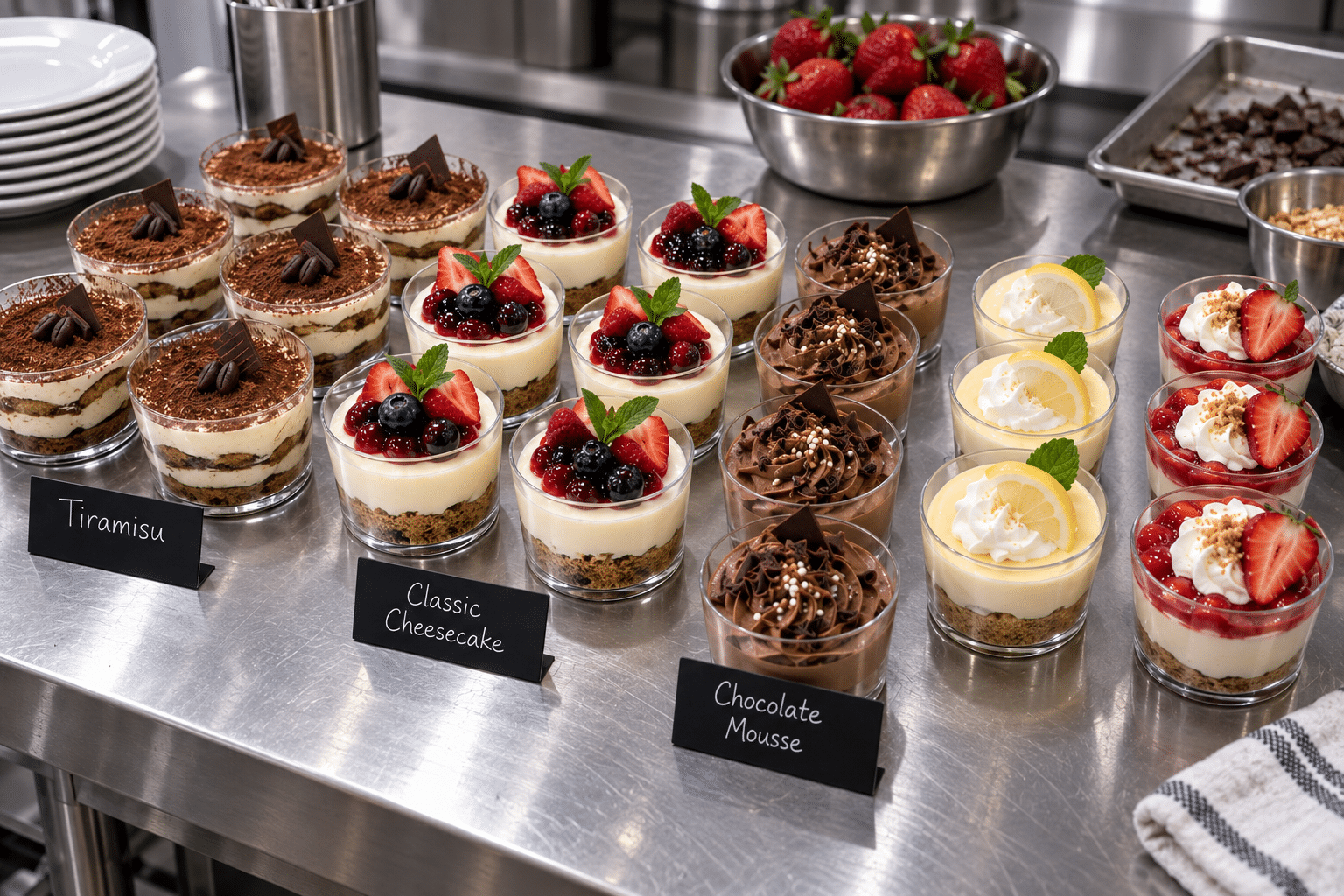
Culinary Specialties is a USDA- and FDA-approved specialty foods manufacturer and wholesale distributor based in San Marcos, CA, supplying hotels, caterers, convention centers, country clubs, hospitals, and airlines since 1996. Its catalog spans appetizers, entrées, canapés, and a dedicated Dessert Cups line — Tiramisu, Strawberry Cheesecake, Raspberry Double Chocolate, and Lemon Cream — produced in an SQF-certified facility and shipped IQF (individually quick frozen) nationwide.
Quick Takeaways
- Food safety certifications (USDA, FDA, SQF, HACCP) are the baseline test before comparing taste or price.
- IQF (individually quick frozen) packaging and a verified cold chain matter as much as the recipe for frozen desserts.
- A manufacturer that also produces appetizers and entrées can simplify vendor management by supplying more of a menu from one source.
- MOQs, lead times, and customization options vary widely between dessert manufacturers, so confirm them directly before signing anything.
- Culinary Specialties has supplied wholesale food products used by Marriott, Hilton, Hyatt, Four Seasons, and Ritz-Carlton properties.
What Does “Wholesale Dessert Manufacturer” Actually Mean?
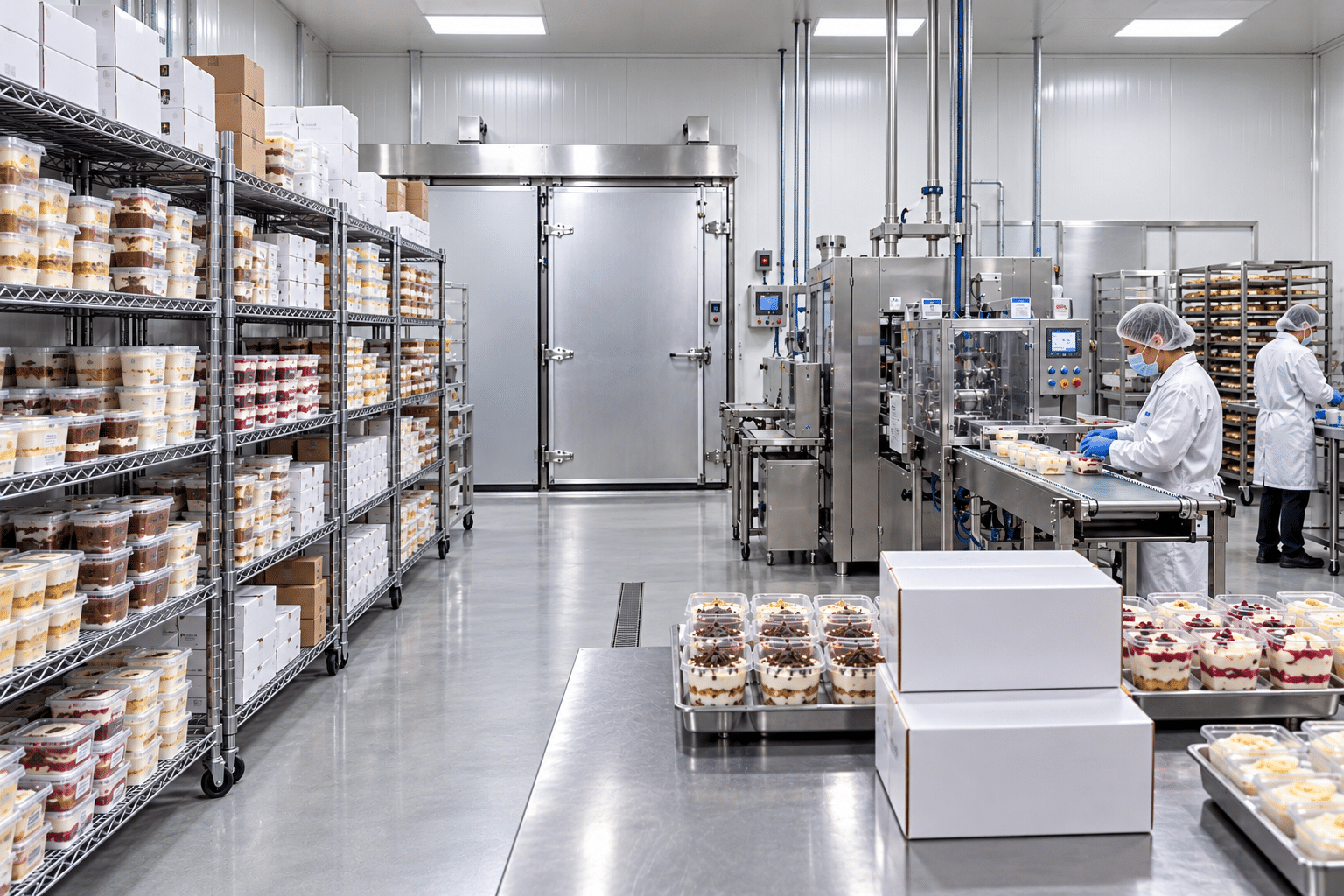
A wholesale dessert manufacturer produces desserts in bulk, to food-safety and consistency standards suited to commercial kitchens, and sells them at volume pricing to businesses rather than individual consumers. This differs from a retail bakery, which sells finished portions directly to walk-in customers.
Most wholesale dessert manufacturers operate USDA- or FDA-inspected facilities and freeze or otherwise stabilize products so they can travel through a distribution network before reaching a commercial kitchen. Buyers are typically hotels, restaurants, caterers, hospitals, schools, and other foodservice operators looking to add dessert options without running their own pastry program. Some manufacturers, like Culinary Specialties, offer desserts as one category within a broader specialty-foods catalog that also covers appetizers and entrées, letting an operator consolidate more of their menu with a single supplier.
What Should You Look for When Evaluating a Dessert Manufacturer?
Evaluate a wholesale dessert manufacturer on food safety certifications, consistency of the finished product, cold-chain handling, and pricing structure — in roughly that order. A manufacturer can have excellent recipes and still be a poor wholesale partner if its logistics or documentation can’t support a growing account.
Food Safety & Certifications
Confirm the manufacturer holds current USDA and/or FDA approval and ask about third-party audits such as SQF (Safe Quality Food) certification, HACCP plans, and Good Manufacturing Practices (GMP) compliance. Culinary Specialties lists SQF certification, USDA and FDA compliance, HACCP, SSOP, and GMP among its standing food safety practices, along with micro testing on finished products.
Consistency & Quality Control
Ask for a sample order before committing to volume, and find out whether the manufacturer uses the same recipe and process across production runs. IQF (individually quick frozen) processing, used to lock in texture and flavor immediately after preparation, is a common industry method for maintaining consistency in frozen desserts and other specialty foods.
Logistics & Cold Chain
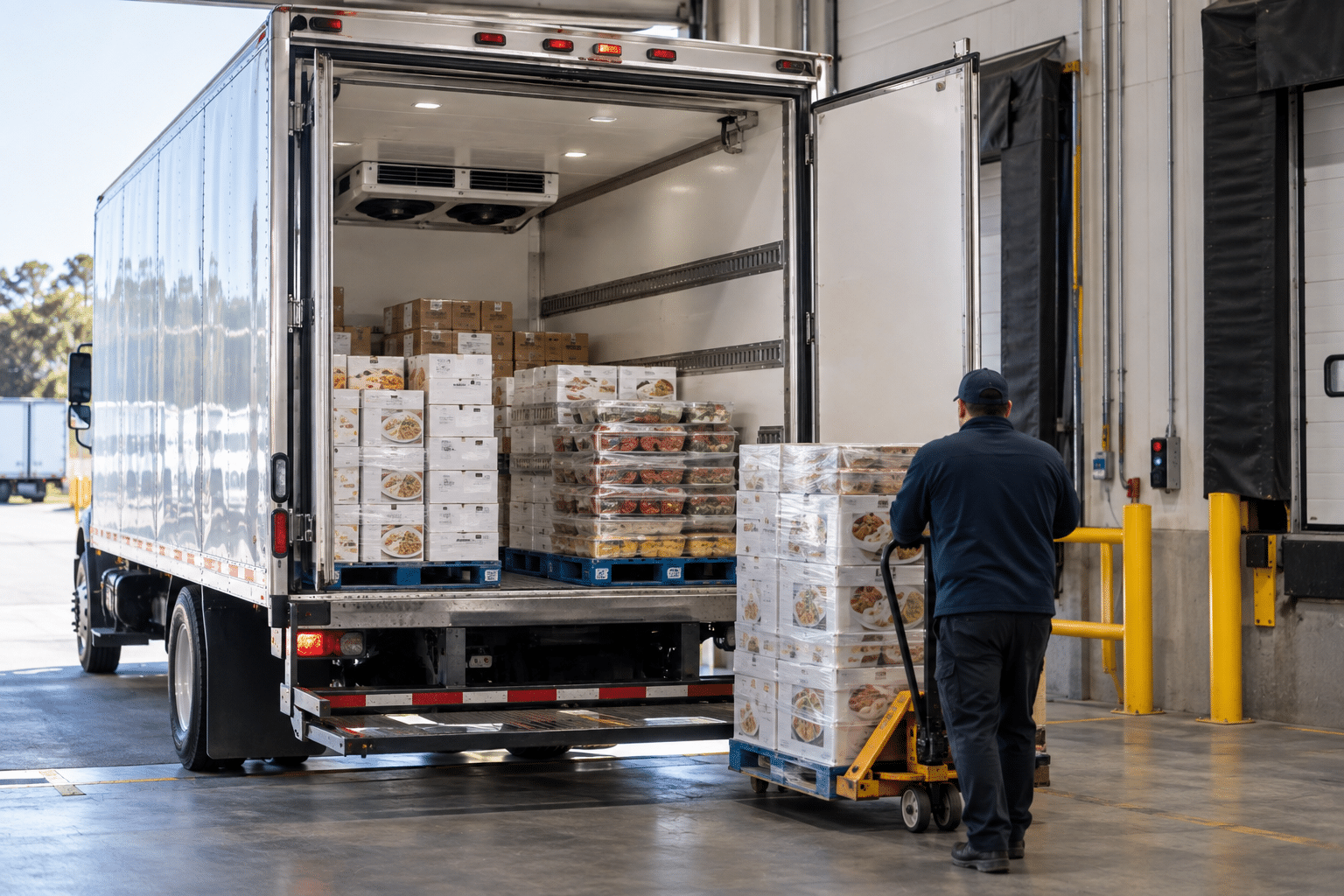
Ask how the manufacturer verifies delivery temperature and how far its distribution network reaches. Frozen and perishable desserts can degrade quickly outside proper temperature range, so a documented cold-chain process — refrigerated trucks, temperature verification, and delivery-day inspections — is worth confirming before the first order, not after a problem.
Pricing & MOQs
Minimum order quantities, case pack sizes, and volume discounts vary by manufacturer and by product line. Get these details in writing early, since they directly affect how a dessert program scales as your own order volume grows.
How Does Private Label or Custom Dessert Production Work?
Private label or custom dessert production means a manufacturer makes a dessert to your specifications — portion size, flavor profile, or packaging — that you then sell or serve under your own brand rather than the manufacturer’s name. This is common among manufacturers that already run large-scale production for other clients.
Not every wholesale dessert manufacturer offers customization, and those that do typically require higher minimum order quantities to justify a dedicated production run. If customization matters to your program, ask specifically what’s negotiable — portion size and packaging are often easier to adjust than the recipe itself — and get a realistic timeline, since custom runs generally take longer to schedule than standard catalog orders.
Is It Better to Buy Wholesale Desserts or Make Them In-House?
Buying wholesale desserts generally makes sense when labor costs, kitchen space, or staff turnover make consistent in-house pastry production difficult; making desserts in-house makes sense when a dessert program is a core part of your brand identity and differentiation matters more than efficiency. Many operators use a mix of both.
Wholesale dessert programs let a kitchen add variety — cheesecake, tiramisu, seasonal flavors — without hiring a dedicated pastry team, and they standardize plate cost and presentation across locations. The tradeoff is less control over the exact recipe. For operators managing banquets, catering volume, or multiple properties, that tradeoff is often worth the labor savings; a flagship restaurant built around a signature dessert program may prefer to keep that piece in-house while still sourcing appetizers or other courses wholesale.
What Questions Should You Ask Before Signing a Wholesale Agreement?
Before signing, ask about minimum order quantities, lead times, shelf life and storage requirements, return or damage policies, and whether pricing is locked in or subject to change with ingredient costs. Get sample products and a written spec sheet for each item you’re considering.
It’s also worth asking how the manufacturer handles a recall or a quality issue, and whether they proactively track FDA or USDA recall and hazard notices for their own ingredients. A manufacturer that can speak clearly to this shows a maturity in their food safety program that smaller or newer suppliers sometimes lack.
How Does Culinary Specialties Approach Wholesale Dessert Supply?
Culinary Specialties supplies its Dessert Cups line — Tiramisu, Strawberry Cheesecake, Raspberry Double Chocolate, and Lemon Cream — through the same wholesale infrastructure it uses for its broader specialty-foods catalog, with nationwide delivery from its San Marcos, CA production facility. Products are IQF and hand-packed after freezing, and delivery trucks are inspected daily with temperature verified at 41°F.
Because desserts are one category within a wider menu that includes appetizers, entrées, canapés, and boxed lunches, operators already working with Culinary Specialties on other courses can add desserts through the same account and delivery relationship rather than onboarding a separate dessert-only vendor.
What Should First-Time Buyers Expect From Onboarding?
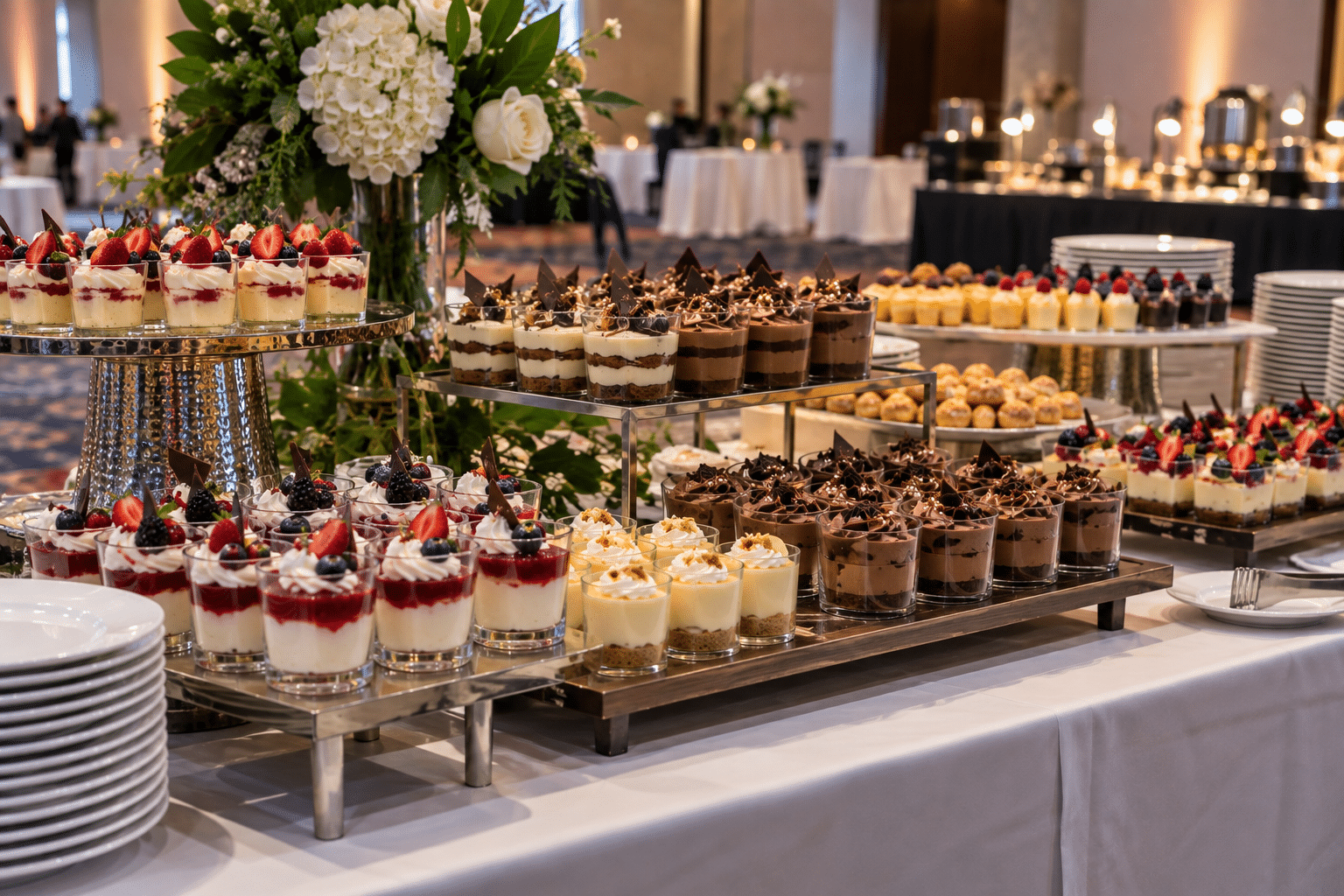
First-time wholesale buyers should expect to submit a quote request specifying the products, quantities, and delivery timeline they need, followed by a conversation to confirm pricing, minimum order quantities, and delivery logistics for their location. Culinary Specialties’ request-quote process asks for company details, product interest, quantity, and target delivery date.
Because Culinary Specialties ships nationwide from a single California facility, first-time buyers outside the West Coast should confirm delivery lead times and any minimum order thresholds for their region before finalizing a first order.
Which Approach Fits Your Operation?
| Situation | Recommendation |
|---|---|
| Hotel or catering company adding dessert variety without a pastry team | Wholesale dessert line from an established, certified manufacturer |
| Multi-property or convention operation needing consistent plate cost | Manufacturer that also supplies appetizers/entrées, to consolidate vendors |
| Restaurant with a signature dessert as a brand differentiator | Keep dessert in-house; consider wholesale for other courses |
| First-time wholesale buyer | Start with a sample order and written spec sheet before committing to volume |
Why Choose Culinary Specialties for Wholesale Dessert Partnerships?
Culinary Specialties brings nearly three decades of specialty-foods manufacturing experience, USDA/FDA/SQF-backed food safety practices, and nationwide IQF delivery to its Dessert Cups line, alongside appetizers, entrées, and other courses that can be sourced through the same account. For operators who want to add or expand a dessert program without taking on a separate vendor relationship, sourcing desserts from a supplier that already handles other parts of the menu can simplify ordering, delivery scheduling, and quality-control conversations to one point of contact. Reach out through the site’s Request a Quote form to discuss product samples, minimum order quantities, and current wholesale terms.
Frequently Asked Questions
What certifications should a wholesale dessert manufacturer have?
At minimum, look for USDA and/or FDA facility approval. Third-party certifications like SQF (Safe Quality Food), along with documented HACCP and GMP practices, indicate a more rigorous, independently verified food safety program rather than self-reported compliance alone.
How much does it cost to buy desserts wholesale?
Wholesale dessert pricing depends on the product, order volume, and manufacturer, so a general guide can’t quote it accurately. Request a quote directly from the manufacturer with your expected order size and delivery location for accurate current pricing.
Can I get a dessert manufacturer to customize flavors or portion sizes?
Some manufacturers offer private-label or custom production, usually with higher minimum order quantities than standard catalog items. Ask directly what’s customizable—portioning and packaging are typically more flexible than the underlying recipe—and confirm lead times for custom runs.
How do I know if a dessert will hold up during shipping?
Ask the manufacturer how products are frozen, packed, and temperature-monitored in transit. IQF (individually quick frozen) processing and verified cold-chain delivery, including temperature checks on delivery trucks, are standard practices among established wholesale food manufacturers.
Is it worth using one manufacturer for both desserts and other menu items?
For operators managing multiple vendors, consolidating desserts with a manufacturer that also supplies appetizers or entrées can simplify ordering and delivery scheduling, though it’s worth comparing product quality and pricing against dessert-specialist suppliers before deciding.
Partner with Us for Delicious Pasta Dishes and More
Culinary Specialties is here to help you simplify the prep process while still offering top-quality food for your clients. Give us a call at (760) 744-8220, or you can request a quote online!